Russia's security services temporarily shut down parts of a special surveillance system protecting President Vladimir Putin and his top aides following the assassination of Iran's Supreme Leader, Ayatollah Ali Khamenei, in Tehran, according to two sources familiar with the matter.
Surveillance System Vulnerability
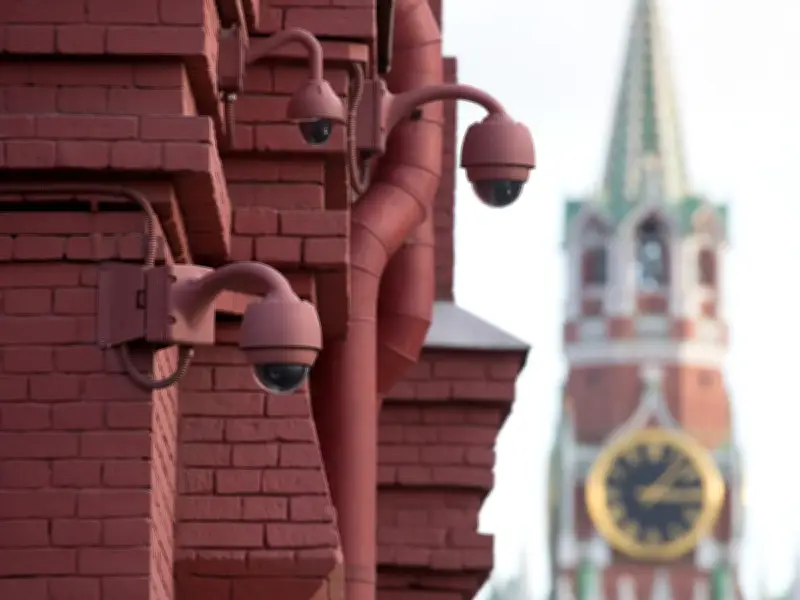
The system, distinct from the nearly 300,000 cameras monitoring Moscow's citizens, was only reactivated after engineers thoroughly inspected it and attempted to completely isolate it from the internet, one source said. The extraordinary precaution was taken after Israeli intelligence used vast amounts of video footage from Iran's traffic cameras to pinpoint the exact location and timing of a February 28 meeting between Khamenei and his closest aides. Several top security officials were killed in the attack, which marked the opening salvo of the joint U.S.-Israel war on the Islamic republic.
AI Revolution in Espionage
The assassination demonstrated a significant technological leap: the use of artificial intelligence to parse millions of hours of video from thousands of cameras to find and surveil targets. Governments have long known that security cameras can be hacked by experienced spies, but recent advances in AI have enabled them to identify specific behaviors and patterns within vast visual datasets.

Dmitry Peskov, Putin's spokesman, did not respond to a request for comment. However, FSB Director Alexander Bortnikov warned regional security chiefs last week that Russia's extensive surveillance network had become a vulnerability, turning the authoritarian regime's tools for monitoring citizens into a weakness that enemies could exploit.
“The recent elimination of senior Iranian officials by the U.S.-Israel alliance is a clear warning sign,” Bortnikov said on May 26, according to Russian state news agencies. “The victims' locations were identified, in part, through software ‘backdoors’ in Tehran's video surveillance systems.”
How AI Transformed Surveillance
Israel's intelligence officers used AI to map Tehran's complex geography, identify behavior patterns among senior officials' bodyguards, and efficiently isolate targets from millions of hours of footage. They combined this with other intelligence, including human sources. The visual capabilities of AI technology became significantly more powerful around 2023 and advanced further about a year ago, according to several sources familiar with the underlying mathematics. These new tools are far more sophisticated than older machine learning algorithms used for facial recognition, gun detection, or vehicle tracking. Unlike previous systems limited to preset searches, the new AI allows language-based searches on video, enabling an almost unlimited range of inquiries.