Montreal's Blue Line Metro Extension Unveils Unique Tunnel-Boring Machine
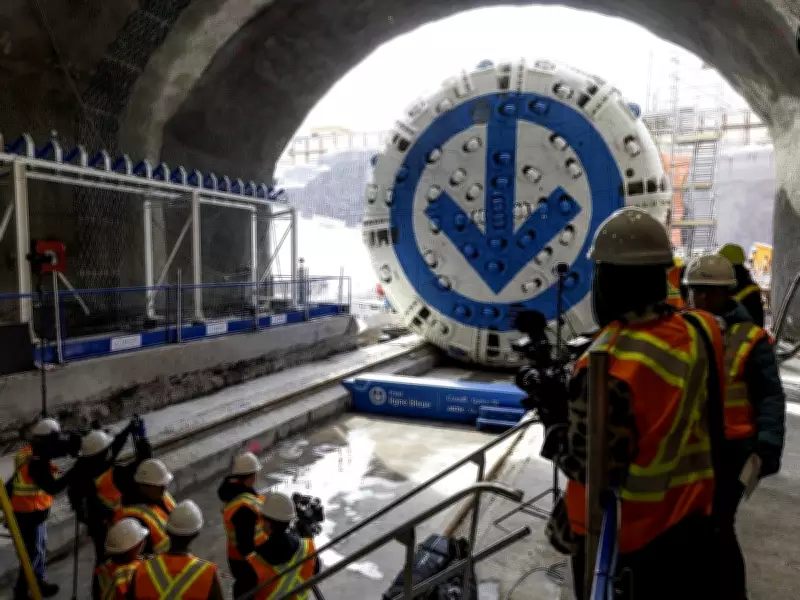
The long-awaited Blue Line metro extension in Montreal is set to be constructed using a one-of-a-kind tunnel-boring machine, among the largest of its kind globally. This custom-built marvel, unveiled by the STM on Monday, February 23, 2026, marks a historic step forward for a project promised for over four decades.
An Impressive Engineering Feat
Painted white with the metro system's iconic blue arrow encircled, the machine stands approximately three storeys high and is situated about 20 meters below ground level at the future Vertières station on Jean-Talon Street in St-Léonard. Arriving in over 100 pieces during the fall, it was meticulously assembled in recent months, showcasing advanced engineering tailored specifically for this endeavor.
Operational Details and Timeline

The tunnel-boring machine will operate at a maximum of five rotations per minute, with circular cutting saws on its face excavating the tunnel at a rate of roughly 15 meters per day. As it advances, it simultaneously pours concrete to finish the tunnel behind it. The machine is expected to take about a year and a half to dig out the four kilometers of tunnel that constitute the majority of the extension. The remaining 1.5 kilometers of the 5.5-kilometer tunnel will be built using traditional methods, with the Blue Line extension ultimately terminating at Galeries d'Anjou.
Environmental and Logistical Aspects
Excavated rocks from the tunneling process will be transported to the Miron Quarry for reuse in other projects, emphasizing sustainability. STM chairperson Aref Salem highlighted that the project remains on schedule and within budget, with an estimated total cost of $7.6 billion and a targeted completion date of 2031. He described this as a historic moment, noting that the Blue Line extension has been a long-standing commitment now finally coming to fruition.
Project manager Maha Clour likened the machine to "a village that rolls all by itself," underscoring its self-sufficient and efficient design.
Technical Specifications and Future Implications
Conceived in Germany by the company Herrenknecht, this tunnel-boring machine was custom-made for the Blue Line extension, considering factors such as soil specifications and project scope. Once the tunnel is completed, the machine will be disassembled and returned to its owners. This marks the first metro extension in Montreal to utilize such technology, with the REM's airport tunnel being the only other public transit project in the area to employ similar methods.
Salem explained that while the STM is interested in pursuing other extensions, such as the Orange Line to Bois Franc, each tunnel-boring machine is uniquely designed for specific conditions and cannot be easily transferred between projects.
Broader Context and Challenges
At the unveiling event, Quebec Transport Minister Jonatan Julien stated that this project demonstrates the province's increased investment in public transit. However, the CAQ government has faced criticism for insufficient funding to maintain the aging metro network. The STM has warned that a major influx of cash is urgently needed to keep existing stations operational and prevent infrastructure decay.
Additionally, Salem noted that the STM must replace its over-50-year-old MR-73 model metro trains, which are nearing the end of their useful life and are less reliable than the newer Azur-model trains. This highlights ongoing challenges in modernizing Montreal's public transit system amidst expanding new infrastructure.
The unveiling of this unique tunnel-boring machine not only symbolizes progress on the Blue Line extension but also underscores the complexities and ambitions of urban transit development in Montreal.