Loose Track Screws Identified as Cause of GO Train Derailment at Union Station
The GO Transit train derailment that disrupted service for thousands of commuters traveling to and from Toronto's Union Station earlier this month has been officially attributed to loose screws on the track infrastructure. Metrolinx CEO Michael Lindsay confirmed the findings during a public board meeting on Thursday, revealing critical details about the safety failure.
Infrastructure Standards Not Met Since 2016
According to Lindsay, lag screws tied to wooden plates at nine separate track locations near the station were secured with only two screws instead of the required four. "That non-compliant bit of infrastructure was allowed to persist since 2016," Lindsay stated, acknowledging that updated standards from that year were not properly implemented. The CEO emphasized the agency's commitment to transparency while addressing the oversight.
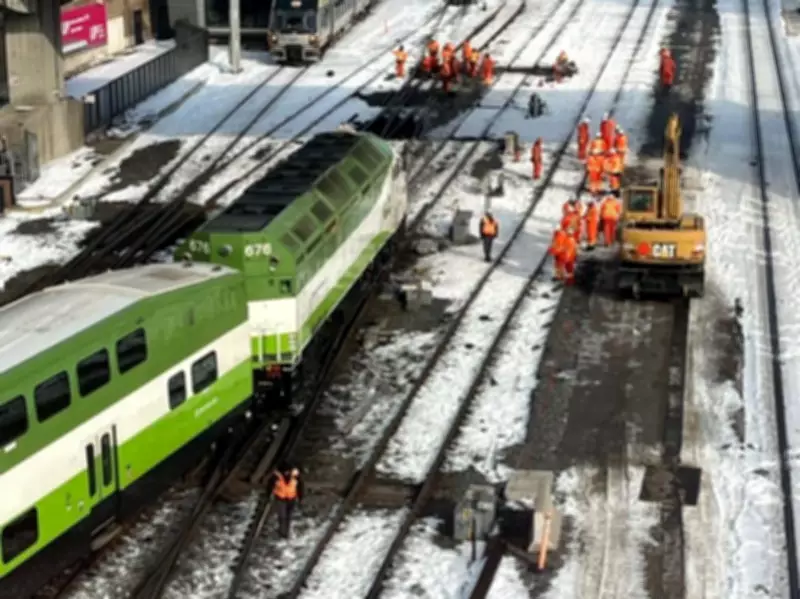
The incident occurred on February 2 when a westbound GO train was leaving Union Station. The inadequately secured screws became fatigued and sheared off the track, causing the train to derail on a curved section of the line. The derailment resulted in significant damage to signaling infrastructure and two track switches, ultimately blocking four platforms and disrupting service for several days.

Safety Blitz and Corrective Measures
In response to the incident, Metrolinx has conducted an extensive safety inspection of the rail corridor at Union Station. "We've corrected the one or two incidents of non-compliance that we found," Lindsay reported. "We've heightened the inspections in the corridor." The transit agency has implemented enhanced monitoring protocols to ensure all infrastructure meets current safety standards.
While no injuries were reported from the derailment, GO Transit and UP Express services experienced substantial disruptions. Lindsay apologized to affected commuters and acknowledged communication shortcomings during the service interruption. "This incident has taught us a lot about our customer communications," he admitted, promising improvements in how service disruptions are communicated to riders in the future.
Refunds and Financial Impact
Metrolinx will be issuing automatic refunds to commuters impacted by the derailment-related service disruptions:
- Refunds for travel on February 2 and 3 for those using Union Station
- Refunds for specific trips on February 4
- Processing within five to ten business days
- No application required from customers
Lindsay confirmed that the agency does not yet have a total cost estimate for both infrastructure repairs and customer refunds. "I 100% will offer a public reconciliation of what the cost of this have been both in respect of the infrastructure cost, but also the refund of customers," he committed during the board meeting.
The CEO emphasized that passenger safety remained the top priority throughout the incident response, with staff working manually to move trains in and out of the station during the service restoration period. The agency continues to evaluate operational procedures to prevent similar incidents in the future.