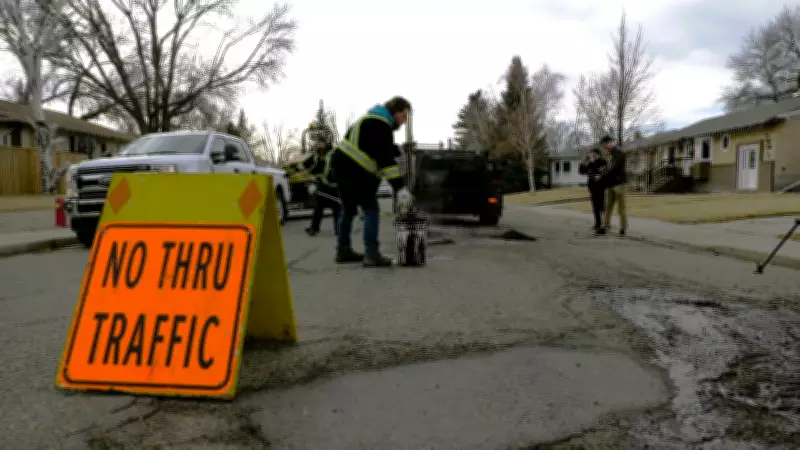
Unseasonable February Warmth Provides Ideal Conditions for Lethbridge Pothole Repairs
City maintenance crews in Lethbridge, Alberta, are capitalizing on an unexpected meteorological advantage this week. Unusually mild temperatures for early February have created what officials are describing as "ideal weather" for conducting essential pothole repairs across the municipality's road network.
Accelerated Road Maintenance Amid Atypical Conditions
The unseasonable warmth, which saw temperatures climbing significantly above seasonal norms, has allowed public works teams to deploy repair crews earlier than typically possible during a Canadian winter. This weather window enables more efficient and durable patching of road surfaces damaged by freeze-thaw cycles and winter precipitation.
Traditional winter conditions often force municipalities to implement temporary cold-weather patches that require replacement when proper asphalt plants resume operations in spring. The current mild spell allows for more permanent repairs using standard hot-mix asphalt, potentially extending the lifespan of these fixes and reducing long-term maintenance costs.

Strategic Response to Winter Road Deterioration
Lethbridge's proactive approach to road maintenance during this weather anomaly demonstrates municipal adaptability to changing climate patterns. Crews are focusing on:
- High-traffic corridors experiencing significant pothole development
- Areas near intersections where braking and acceleration cause additional wear
- Residential streets with documented safety concerns from residents
- Access routes to emergency services and essential facilities
The repair operations come at a critical time, as winter weather typically exacerbates road surface deterioration through repeated freezing and thawing cycles that weaken pavement structures.
Broader Implications for Municipal Infrastructure Management
This weather-driven acceleration of infrastructure maintenance highlights how municipalities must remain flexible in their approach to public works scheduling. The efficient use of favorable weather conditions represents both a cost-saving measure and an opportunity to improve road safety before the traditional spring repair season begins.
While the current mild temperatures provide immediate benefits for road repair crews, they also raise questions about changing weather patterns and their long-term impact on municipal infrastructure planning and maintenance budgets across Alberta and throughout Canada.