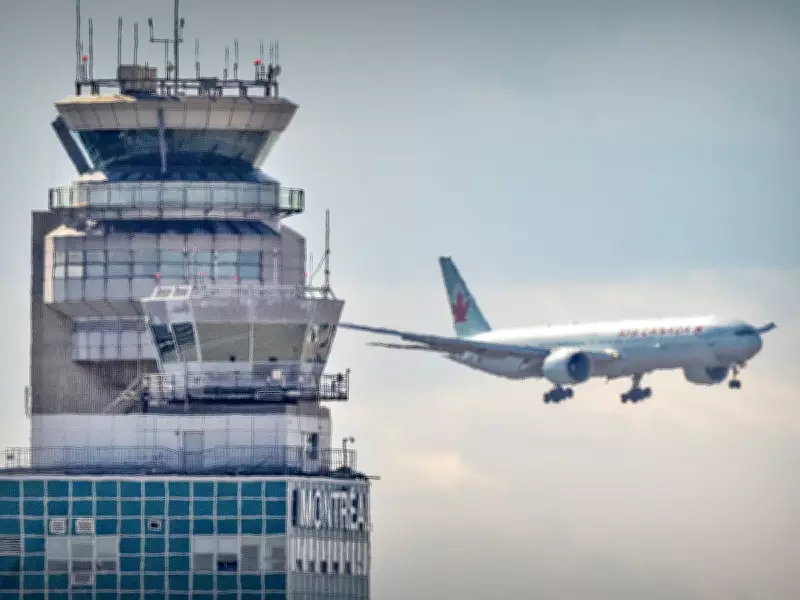
The Human Burden of Air Traffic Control: Safety Under Pressure
The haunting voice of a New York air traffic controller desperately ordering a fire truck to stop—repeatedly, to no avail—will likely linger in the minds of Canadian air travelers for years. This chilling audio emerged from the tragic incident on March 22, 2026, when Air Canada Flight 8646, operated by Jazz Aviation as Air Canada Express, collided with a fire truck crossing LaGuardia Airport's Runway 4 just eight seconds after landing. The crash resulted in the deaths of both pilots and injuries to dozens, now under investigation by the National Transportation Safety Board (NTSB).
The Weight of Responsibility
Air traffic controllers are the unsung guardians of aviation safety, tasked with the monumental responsibility of ensuring the secure movement of aircraft and the hundreds of lives aboard. Yet, as this incident starkly reveals, they remain profoundly human, vulnerable to the pressures and complexities of their roles. The collision has cast a spotlight on the immense burden shouldered by controllers across Canada and their critical mission to maintain safe takeoffs and landings nationwide.
Kathy Fox, former head of Canada's Transportation Safety Board (TSB) and a former air traffic controller herself, expressed deep empathy for the controller involved. "My heart goes out to this controller. That was my worst nightmare," she said, highlighting the emotional toll such events exact. Fox emphasized the importance of the ongoing investigation, noting, "I'm looking forward to hearing what investigators are going to find out, all the layers that could have prevented this and prevented another controller from having to feel what that controller may be feeling right now, and people from dying, because ultimately that's the whole thing. You don't want anybody to suffer."

Systemic Vulnerabilities Exposed
Preliminary findings from investigators have uncovered a critical flaw: the fire truck lacked a transponder, a device that would have alerted the air traffic controller to its location on the active runway. This absence of technology underscores the multifaceted nature of aviation safety, where human oversight must often compensate for equipment shortcomings. Fox reflected on the broader context, stating, "There were many, many things that didn't go right that night. And I'm quite confident that the NTSB, with the support of TSB, will get to all of the factors that could have prevented that accident because nobody is perfect. People make mistakes."
Inside the Control Tower: A Blend of Science and Art
To understand the controller's world, consider the experience of Dennis Whyte, who left university in 1990 to train as an air traffic controller. Starting in Quebec City with outdated 1950s-era equipment—"like a double slash would represent an airplane with no digital information whatsoever on a black and white cathode ray tube, like you see in the Twilight Zone"—he later moved to Montreal, where digital upgrades transformed operations. However, challenges persisted, including mandatory overtime due to chronic understaffing. "I was always working in a short-staffed specialty; there was always mandatory overtime," he recalled.
Whyte, who retired last year, described air traffic control as both a science and an art, akin to a meticulously choreographed performance. "I used to think of it like a kind of ballet or a coordinated figure skating show, where all of the parts are moving and you're in control and you're in charge of making sure that the airplanes arrive in sequence. But you have to adjust speeds, you have to adjust altitudes," he explained. "You're thinking in three dimensions. You're looking ahead for each airplane. For the next 60 seconds, is there going to be a problem? Or in the next two minutes, is there going to be a problem? Am I turning somebody too much or too little?"

Lessons from Tragedy
The LaGuardia incident serves as a sobering reminder of the high-stakes environment in which air traffic controllers operate. Their role demands not only technical expertise and split-second decision-making but also immense emotional resilience. As investigations continue, the focus remains on enhancing safety protocols, improving technology, and supporting the human elements at the heart of aviation. In a field where perfection is expected but humanity prevails, the lessons learned from this tragedy may pave the way for a safer future in the skies.