Political Pressure Mounts for Investigation into Toronto's $13 Billion Transit Fiasco
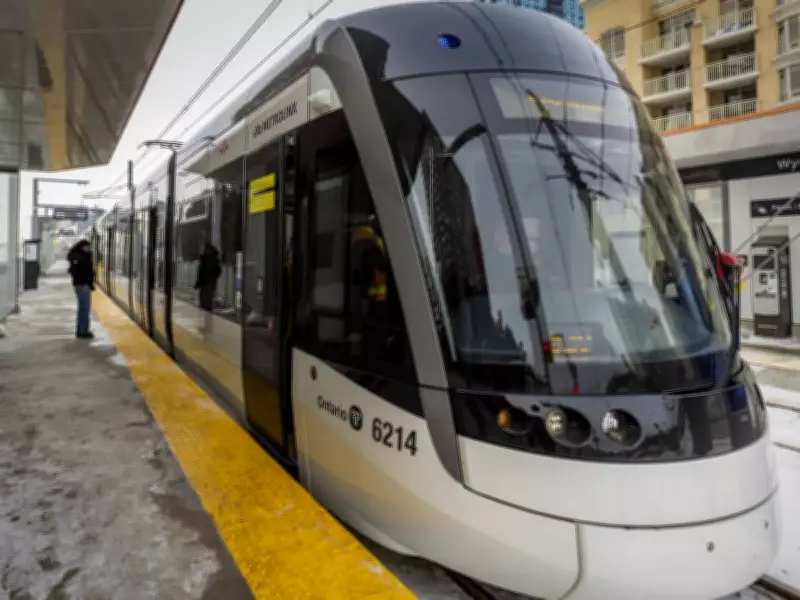
As Ontario Premier Doug Ford resists calls for an official inquiry into Toronto's Eglinton Crosstown light rail debacle, public demand for accountability is intensifying. The 19-kilometer LRT project, with approximately half underground and half at-grade construction, consumed roughly $13 billion over 15 years of development—a staggering figure that has raised serious questions about infrastructure spending practices.
A Project Without Proper Oversight
With no functional opposition at Queen's Park to challenge the government's position, citizens themselves must now champion the call for transparency. The absence of political pressure makes public demand crucial to ensure future projects don't repeat the same costly mistakes.
Early operational reviews since the line's opening have been generally positive, especially when compared to Toronto's recently launched Finch West LRT, which has faced criticism for running slower than the bus service it replaced. However, the Eglinton Crosstown's underground sections naturally provide smoother operation than at-grade alternatives.

The Global Context of Transit Costs
The project's astronomical price tag—approximately $684 million per kilometer—stands out even on the global stage. According to the Transit Costs Project at New York University's Marron Institute of Urban Management, which maintains a database of nearly 900 public transit projects worldwide, North America consistently ranks among the most expensive regions for infrastructure development.
Fourteen of the fifty most expensive projects in their database are located in North America, with three specifically in Toronto and one in Montreal. This pattern suggests systemic issues rather than isolated problems with individual projects.
Institutional Factors Driving Up Expenses
Research indicates that infrastructure costs often have less to do with technical challenges or labor expenses than with institutional factors. Alon Levy, a research scholar with the Transit Costs Project, noted in a 2021 report that "there is no correlation between a country's GDP per capita and its subway construction costs."
Instead, the primary determinants appear to be:
- Political interference and meddling in project planning
- NIMBYism (Not In My Backyard) opposition
- Lack of specialized expertise in large-scale transit projects
- Inconsistent decision-making processes
Levy emphasized that "the biggest factor behind a project's cost is what country it is in, and costs are fairly consistent even across different geologies... This is purely institutional."
The Urgent Need for Accountability
Without a comprehensive inquiry into what went wrong with the Eglinton Crosstown project, experts warn that Ontario risks repeating the same mistakes on future infrastructure initiatives. The lack of accountability mechanisms virtually guarantees continued wasteful spending on transportation projects.
While the Eglinton line currently operates in a "soft launch" mode with limited hours and below maximum speeds, its performance already surpasses the bus service it replaced. However, operational success cannot justify the extraordinary financial burden placed on taxpayers.
The debate extends beyond this single project to question why North American cities consistently pay premium prices for public transit infrastructure that other nations build more efficiently. As Toronto continues to expand its transit network, understanding the failures of the Eglinton Crosstown becomes increasingly urgent to prevent further billions from being misspent.