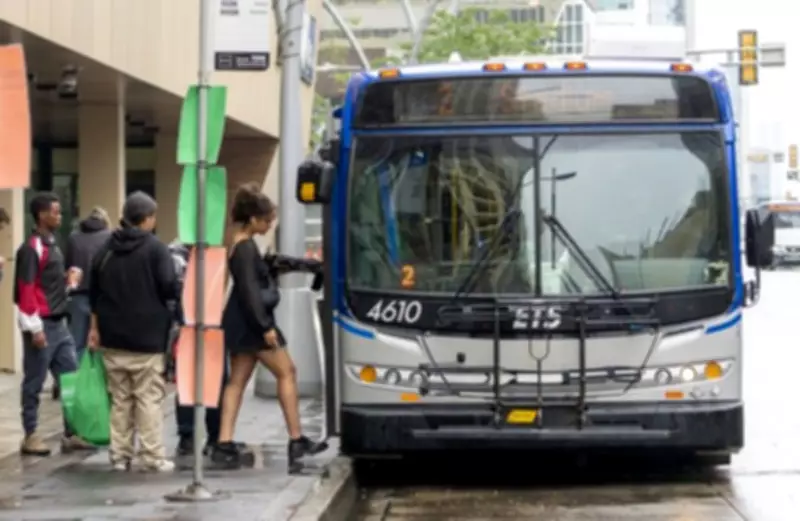
In a scathing critique of municipal decision-making, columnist Lorne Gunter contends that Edmonton's city council and administration are pursuing a bus rapid transit (BRT) strategy that is fundamentally flawed and destined to exacerbate existing transit problems. According to Gunter, the plan suffers from ideological blindness that prevents officials from listening to Edmontonians' actual transportation needs.
The Ideological Blind Spot in Urban Planning
Gunter identifies a persistent pattern where city leaders become fixated on fashionable, left-leaning urban planning theories without considering practical realities. He argues that council members and administrators are so convinced of their superior understanding of densification, environmental sustainability, and 15-minute city concepts that they have become deaf to legitimate objections from residents.
"Both council and the administration get fixated on fashionable, lefty theories about urban planning until there is no point in trying to convince them otherwise," Gunter writes. "They know better than you about densification and environmental sustainability."

The Flawed Hub-and-Spoke Model
The core of Gunter's criticism focuses on Edmonton's adherence to a traditional hub-and-spoke transit model, which concentrates on moving people in and out of the downtown core. This approach, he argues, is particularly ill-suited to Edmonton's unique workforce distribution patterns.
"Of the 10 largest cities in the country, Edmonton has the lowest percentage of its workforce working in the core and the highest percentage working outside its ring road," Gunter emphasizes. "A hub-and-spoke transit model is not what's needed."
Instead of focusing on downtown commutes, Gunter suggests that Edmonton would benefit more from a web-like transit system designed to transport workers from residential areas to industrial zones throughout the city. However, he remains skeptical that even this alternative approach would succeed given current transit realities.
The Fundamental Transit Challenges
Gunter outlines two critical factors that determine transit ridership success:
- People use transit when they cannot afford personal vehicles
- People choose transit when it is faster than driving
In Edmonton's case, fewer than five percent of residents lack access to a car, which explains why no more than ten percent commute using buses and trains. Additionally, bus travel is rarely faster than driving, and while light rail transit (LRT) could potentially offer speed advantages, the cost of building sufficient lines to make it convenient for most residents is prohibitive.
Why BRT is Doomed to Fail
Despite being cheaper to implement than LRT and offering greater route flexibility, Gunter argues that Edmonton's BRT plan is fundamentally flawed because it follows the same hub-and-spoke design that city planners seem obsessed with.
"Dedicated BRT lanes are cheaper to build than LRT tracks, so more of them can be built and their routes can be more easily modified after the fact," Gunter acknowledges. "But by-and-large, BRT follows the same hub-and-spoke design council and the city's urban planners are possessed by."
The columnist concludes that until city leaders abandon their ideological biases and develop transit solutions that actually address Edmonton's unique geographic and workforce patterns, public transportation initiatives will continue to disappoint residents and fail to achieve meaningful ridership increases.