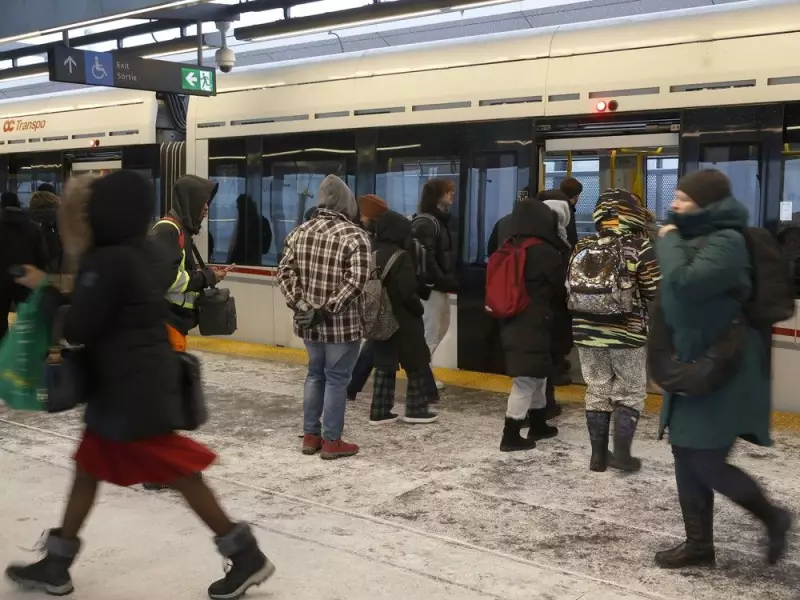
Ottawa Councillor Takes to the Tracks to Verify Transit Service Claims
In an unusual display of civic oversight, Kitchissippi Councillor Jeff Leiper spent his Friday morning at Lyon Station conducting a firsthand assessment of OC Transpo's O-Train Line 1 operations. This hands-on investigation followed the transit agency's announcement of significant service reductions due to mechanical issues affecting the majority of the train fleet.
Mechanical Issues Force Major Service Adjustment
Earlier this week, OC Transpo revealed that problems with cartridge bearing assemblies had forced approximately two-thirds of the Line 1 train fleet out of service. The transit authority warned that while frequency would remain consistent, capacity would be limited as a mixture of single- and double-car trains operated during this service reduction period.
Customers were advised to anticipate potential crowding on trains and platforms during peak rush-hour periods, creating concerns about the practical impact on daily commuters across the nation's capital.

Councillor's Data-Driven Verification Mission
Standing on the platform from approximately 8:15 a.m. for about 45 minutes, Councillor Leiper meticulously tracked trains arriving and departing at three to four minute intervals. Each time a train passed, he recorded its identification number using the Rail Fans Canada platform as part of a broader crowdsourced data collection effort.
"I will often treat that kind of information coming from OC Transpo as aspirational," Leiper explained to the Ottawa Citizen following his monitoring session. "The temptation on the part of bureaucracies is going to be to put the best face forward."
Verification Results and Future Monitoring Plans
The collective data from transit observers revealed 16 different single-car trains in operation during Friday morning's peak period. This number aligned with OC Transpo's stated goal for available trains during high-demand hours.
Leiper acknowledged that in this instance, the transit agency appeared to be providing realistic projections based on actual operational capabilities, rather than overly optimistic estimates.
Beyond simply counting trains, the councillor's mission included observing potential crowding issues on platforms and trains. While he noted that crowding wasn't a significant problem during Friday's monitoring session, he expressed concern about upcoming weekday commutes.
"The big test will be next week," Leiper stated, revealing plans to return to the platform on Monday when more commuters typically travel to offices. "I'm anticipating some crowding impacts, and I hope I'm wrong. But obviously we also don't have a choice."
Broader Transit System Impact
Importantly, the mechanical issues and necessary repairs only affect trains operating on Line 1. Service on Lines 2 and 4 continues normally without disruption, providing some relief for passengers using those routes.
This incident highlights ongoing challenges with Ottawa's light rail transit system and demonstrates how elected officials are taking proactive measures to verify service claims and ensure transparency for constituents relying on public transportation.