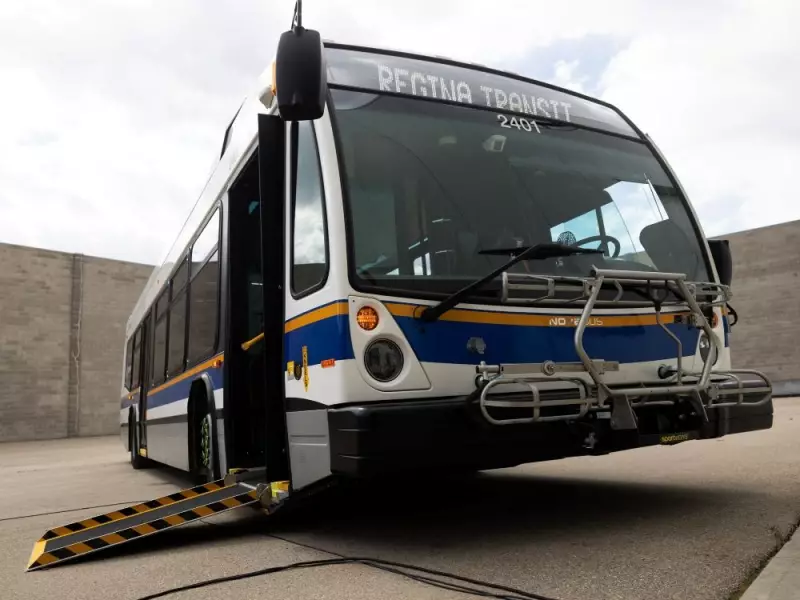
The ambitious transition to zero-emission public transit is hitting significant roadblocks in Canadian cities, with Regina becoming the latest municipality to report serious operational and financial problems with its electric bus fleet.
Regina's Winter Reality Check
During a recent city council budget hearing, Regina Transit union president Sukhwinder Singh delivered a blunt assessment of the new electric buses. He revealed that the vehicles are ill-suited for Saskatchewan's climate, stating they are "not for the Saskatchewan weather." Singh reported that on a single Friday, four buses had to be pulled from service and recharged after their batteries plummeted to just 15% capacity.
The buses' range drastically shrinks in cold conditions, limiting their operation to merely two or three hours per charge in winter. Singh also noted that performance is unreliable even in summer, undermining the primary goal of saving on fuel costs. "I'm not in favour of electric buses at all," he concluded, highlighting a growing skepticism among frontline transit workers.

Edmonton's Costly Precedent
Regina's struggles mirror a larger, expensive failure in Alberta's capital. In 2018, Edmonton launched a high-profile $43 million project to acquire electric buses, with funding shared between the federal government, the Province of Alberta, and the city itself. The initiative was championed by then-Mayor Don Iveson and federal Transport Minister Amerjeet Sohi, who promised a more reliable and environmentally friendly fleet.
Today, the outcome is starkly different. Of the 60 Proterra-built buses in Edmonton's 1,000-vehicle fleet, only a quarter were operational as of December 2023. The manufacturer, Proterra, filed for bankruptcy, prompting Edmonton to join bankruptcy proceedings claiming $82 million in damages. City lawyers disclosed that the buses never achieved their promised 328 km range, averaging only about 165 km in winter and 250 km in warmer weather.
Despite Proterra's exit from bankruptcy in 2024 after a buyout, Edmonton remains saddled with the faulty vehicles.
Suburban Experiments and Persistent Promises
The suburb of St. Albert experienced similar disappointments with its fleet of seven buses from Chinese manufacturer BYD, acquired in 2017 and 2018. The reality fell far short of awards and accolades:
- Three units required battery replacements within five years.
- They traveled roughly half the monthly distance of diesel buses.
- Winter range was just 110 km, far below the estimated 233 km.
- Their projected lifespan was downgraded from 18 to 12 years.
Despite these documented failures in Edmonton and St. Albert, Regina proceeded with its own electrification plan. The city attempted to reassure the public by differentiating its supplier, choosing Novabus for its "long history of success in Canadian cities," unlike Edmonton's choice of Proterra.
The recurring issues across multiple cities suggest a systemic challenge in adapting electric bus technology to Canada's diverse and often harsh climate, raising critical questions about the financial and operational viability of current zero-emission transit mandates.