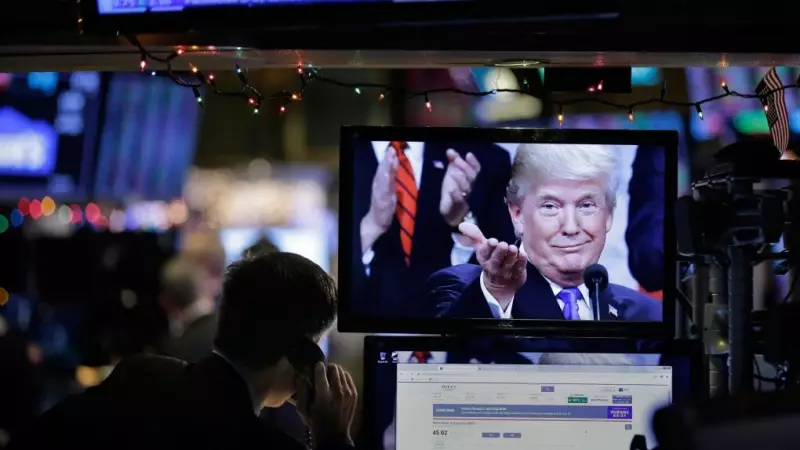
The delicate equilibrium between former U.S. President Donald Trump and the colossal $30 trillion American bond market remains a focal point of financial scrutiny as 2025 draws to a close. This vast market, a cornerstone of global finance, is navigating a period of heightened sensitivity to political rhetoric and policy signals from the former president, whose potential return to the political forefront adds a layer of uncertainty for investors.
The Stakes of a $30 Trillion Relationship
At the heart of this dynamic is the U.S. Treasury market, a financial behemoth that funds government operations and serves as a global benchmark for interest rates. As of December 2025, the market's valuation stands at approximately US$30 trillion, making its stability paramount for both the American and global economies. Historically, bond markets have reacted sharply to fiscal policies that threaten to increase government debt or stoke inflation, and Trump's previous tenure and current policy proposals are watched closely for such signals.
The current "peace" is described as tenuous because it hinges on market perceptions of fiscal discipline. Any indication of expansive, unfunded spending or policies that could lead to higher deficits can trigger a sell-off, driving up yields (which move inversely to prices) and increasing borrowing costs across the economy. This affects everything from mortgage rates to corporate investment.

Market Sensitivity to Political Winds
Financial analysts note that the bond market has become a barometer for political risk. During Trump's presidency, markets occasionally experienced volatility tied to trade policy announcements and tax cuts. The current landscape suggests a renewed vigilance. The market is effectively in a state of watchful waiting, assessing whether Trump's evolving economic platform will align with or challenge the need for long-term debt sustainability.
This relationship is further complicated by the Federal Reserve's independent monetary policy. The interplay between potential presidential fiscal initiatives and the Fed's mandate to control inflation creates a complex dance that bond traders must decipher. A misstep in communication or a policy clash could unsettle the current fragile balance.
Implications for Investors and the Economy
For institutional investors, pension funds, and everyday Canadians with exposure to U.S. assets, this tenuous peace necessitates a cautious approach. The stability of U.S. Treasuries has long been considered a given, but political factors are injecting a new element of unpredictability. A significant disruption could have ripple effects, impacting currency exchange rates, international capital flows, and the cost of capital worldwide.
In essence, the $30 trillion bond market acts as a powerful, if silent, check on political power. It rewards perceived fiscal responsibility and punishes profligacy through the mechanism of interest rates. The ongoing dynamic with Donald Trump underscores a fundamental truth: even the most prominent political figures must ultimately answer to the collective judgment of the financial markets, which vote continuously with billions of dollars.
The coming months will be critical in determining whether this peace holds or fractures, setting the tone for economic conditions as the United States moves deeper into the election cycle and beyond.