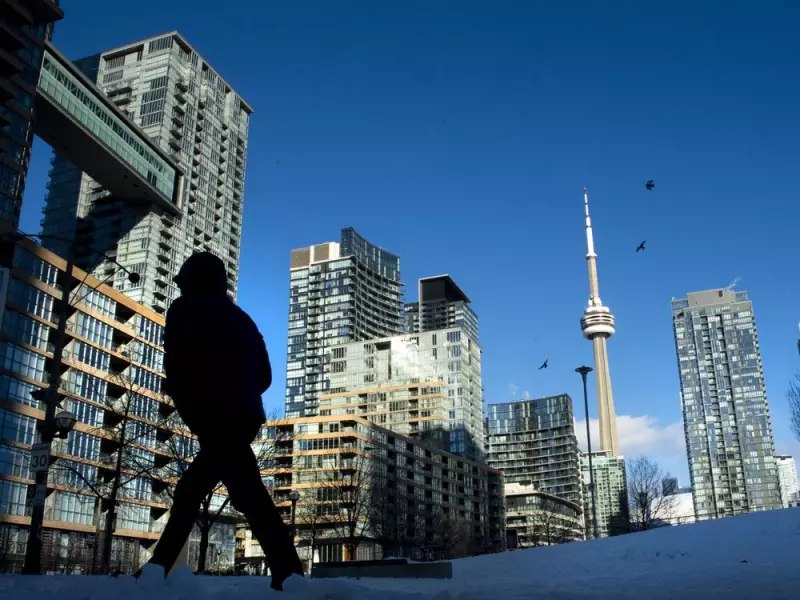
Toronto's commercial real estate landscape, once defined by empty towers and quiet streets, has reached a pivotal turning point. New data reveals Canada's largest office market is not just recovering but leading the national charge, fueled by a powerful surge in demand as employees head back to their desks.
A Market Ignited: Record Leasing Activity
According to a January report from Colliers International Group Inc., office leasing in Toronto for the fourth quarter of 2025 soared to nearly 2 million square feet. This figure marks the highest level of activity seen in the past five years, signaling a decisive shift from the remote-work era. Marc Meehan, research managing director at CBRE Group Inc., captured the sentiment succinctly: “Toronto is on fire. We’ve seen a very significant surge of leasing activity.”
The driving force behind this resurgence is clear. Adam Jacobs, Colliers' national head of research, stated, “Demand is roaring again,” attributing the shift to widespread return-to-office mandates. Major institutions across banking, government, insurance, and technology have been aggressively calling their workforces back full-time. Key tenants fueling this demand include financial giants like Royal Bank of Canada, CIBC, TD Bank, and Scotiabank, alongside tech players such as Wealthsimple Inc., Stripe, Inc., and the Mastercard Foundation.

Beyond the Headlines: Vacancy, Sublets, and a Two-Tier Market
While the headline leasing numbers are strong, the recovery reveals nuanced trends. Toronto's downtown office vacancy rate remains elevated at approximately 16 per cent, near historic highs. However, a key indicator of market health—subleased space—has improved dramatically. A separate January report from CBRE shows sublet availability in downtown Toronto has declined to 16.5 per cent, returning to levels last seen in 2017, a period of robust business conditions.
Marc Meehan explained that subleasing, which peaked in mid-2023 as companies downsized, is a critical demand gauge. The current drop signals a “healthy, normalized market.” Furthermore, not all office space is benefiting equally. The pandemic has accelerated a flight to quality, with demand concentrating on higher-quality, amenity-rich buildings (Class AAA). Rents for these top-tier properties in Toronto have climbed from $50 to $55 per square foot, representing a 21 per cent increase since 2020.
Toronto Leads as Other Markets Lag
The revival is positioning Toronto ahead of other major Canadian cities in the office market recovery race. In contrast, Calgary is seeing demand tempered by consolidation in the energy sector due to mergers and acquisitions. Vancouver's leasing activity, meanwhile, remains flat. Evidence of Toronto's rebound extends beyond real estate data; public transit agency Metrolinx reported a 10 per cent year-over-year increase in ridership during the fourth quarter, underscoring the return of commuters to the downtown core.
Industry observers are now watching to see if Toronto's positive momentum will spread. “We are watching other markets to see if the trends that we’re seeing in Toronto are going to cascade to other markets,” said Meehan. “We believe so in time, but the rate at which it happens is yet to be determined.” For now, the data paints a clear picture: after years of uncertainty, Toronto's office market is firmly back in business.