

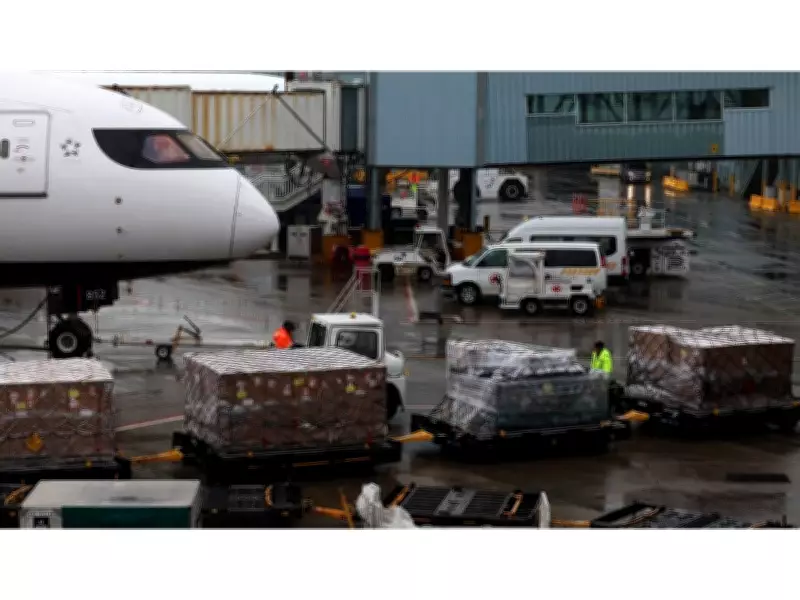
As Canada's premier Pacific gateway to Asia and beyond, Vancouver International Airport stands at a critical juncture for enhancing trade and air connectivity. This imperative gains urgency in light of the challenging provincial budget unveiled in Victoria last week, which underscores the need for innovative economic strategies rather than reliance on cuts or taxes alone.
The Financial Landscape and Economic Imperatives
British Columbia's finance minister has emphasized that deficit reduction cannot be achieved through austerity measures, nor can prosperity be fostered solely through taxation. Instead, the province must pivot towards stimulating robust economic growth. A significant component of this strategy involves identifying new international markets for local products and establishing efficient routes to facilitate their export.
Shifting Trade Patterns and Rising Demand
Amidst geopolitical disruptions and evolving trade dynamics, there has been a notable surge in demand for enhanced air services from YVR. Key regions driving this growth include the Asia-Pacific, India, and the Gulf Region. In 2025, the airport recorded unprecedented cargo volumes and passenger traffic, with Asian routes experiencing over a 15 percent increase in activity.

Air cargo operations, particularly for high-value exports, are expanding rapidly, with projections indicating continued growth into 2026. This trend aligns with similar advancements in marine cargo throughput at the Port of Vancouver, reinforcing British Columbia's role as a vital trade hub.
A Generational Opportunity for Connectivity
Recent engagements in Hong Kong and Singapore, part of an Asia Pacific Foundation conference, revealed a clear consensus among business leaders, investors, and logistics experts. Canada possesses a unique, generational opportunity to deepen trade ties and connectivity across the Pacific. As highlighted in the province's Look West Strategy and echoed by Prime Minister Mark Carney, British Columbia offers sought-after resources such as critical minerals, lumber, fresh seafood, agri-foods, and high-value manufactured goods.
The Urgency of Action
However, this window of opportunity is not indefinite. While international markets recognize Canada's offerings, they have alternative suppliers. Failure to deliver products promptly could result in lost opportunities as other nations step in. The urgency to act is paramount to prevent this potential closure of trade avenues.
YVR's Preparedness and Strategic Investments
Vancouver International Airport is well-positioned to capitalize on this moment. Post-pandemic investments in infrastructure, innovation, and technology have bolstered its capacity to handle increased international flights and cargo. With a stable financial foundation, YVR can pursue further enhancements, particularly in cargo facilities and innovative projects aimed at streamlining global exports from British Columbia and Canada.
By leveraging these assets, the airport can play a pivotal role in driving economic growth, ensuring that British Columbia's products reach global markets efficiently and competitively.






