The journey toward establishing Snowberry as a new residential community in Edmonton represents a long-term vision that begins with careful planning and extends years into the future. Currently in the conceptual phase, this proposed neighborhood in southeast Edmonton has the potential to eventually accommodate more than 21,000 residents, marking a significant step in the city's ongoing expansion efforts.
A Strategic Response to Population Growth
With Edmonton's population steadily increasing—having grown by 18.3 percent over the past five years according to Alberta government statistics—the city faces mounting pressure to develop new residential areas. The current population stands at approximately 1.2 million, with municipal targets aiming for two million residents in the coming years. As existing subdivisions in the southwest and west regions near completion, development attention has shifted decisively toward the southeast quadrant of the city.
Mike Kohl, senior vice-president of communities at Brookfield Residential, emphasized the significance of this shift, noting that the southeast represents one of the final major growth areas to begin substantial development. "This region demonstrates some of the strongest market demand in Edmonton," Kohl explained, highlighting the strategic importance of planned communities like Snowberry.

Geographical Scope and Planning Framework
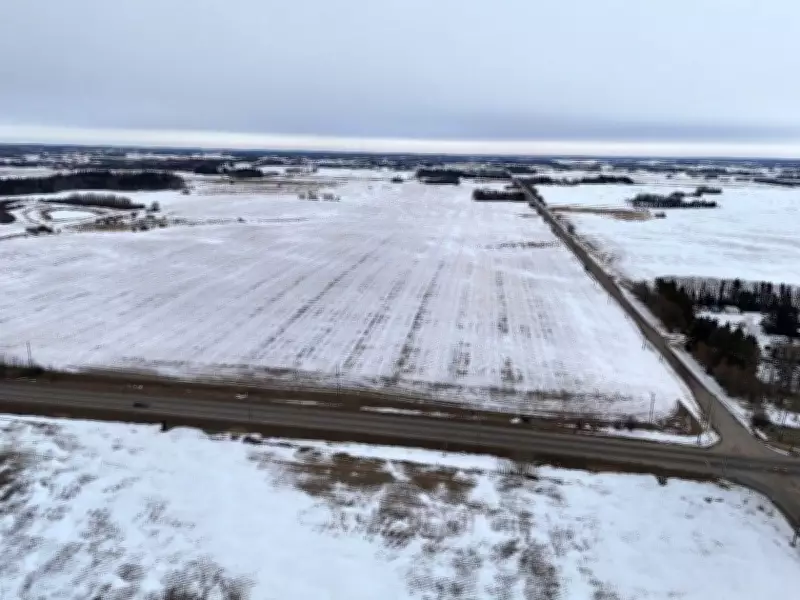
The proposed Snowberry community encompasses approximately 385 hectares (950 acres) of land, bounded by 28th Avenue S.W. to the north, 17th Street S.W. to the east, 41st Avenue S.W. to the south, and 50th Street S.W. to the west. This substantial area falls within the broader Decoteau region, which received municipal approval for development through the Decoteau Area Structure Plan back in 2015.
Snowberry represents one of three designated zones approved by Edmonton city council to address future residential needs, alongside Horse Hill in the northeast and Riverview in the west-southwest. While Alberta's population growth is projected to moderate to approximately one percent annually in the coming years, with Edmonton expected to welcome around 26,000 new residents this year alone, urban planners emphasize that community development requires forward-thinking strategies that span decades.
The Development Timeline and Current Status
The planning process for Snowberry illustrates the extended timeframe characteristic of major urban development projects. The foundational Decoteau Area Structure Plan, which provides the overarching framework for growth in Edmonton's southeast, received council approval nearly a decade ago. This comprehensive document established the basic parameters for future neighborhood development throughout the region.
Within the Decoteau area, multiple subdivisions are progressing through various stages of development. These include Snowberry, Kettle Lakes, Meltwater, and Alces—where construction and home sales are already underway. Snowberry itself has now advanced to the preliminary stages of the Neighbourhood Structure Plan phase, where developers Brookfield Residential, NAC, and the Rohit Group are refining specific details about the community's design and infrastructure.
This more granular planning stage focuses on neighborhood-specific elements that will ultimately shape the daily lives of future residents. From transportation networks and green spaces to commercial areas and community facilities, each aspect requires careful consideration to ensure Snowberry evolves into a sustainable, livable community that meets Edmonton's long-term housing needs.
The development of Snowberry exemplifies how urban growth requires both visionary planning and patient execution. As Edmonton continues its expansion toward becoming a two-million-resident city, communities like Snowberry will play increasingly vital roles in accommodating new populations while maintaining quality of life standards that Edmontonians have come to expect.