The Final Stitch: Ottawa's Oldest Shopping Mall Closes Its Doors
For nearly two decades, Linda Wang operated Fine European Tailoring in Westgate Shopping Centre with meticulous care and dedication. When Ottawa's oldest shopping mall closed permanently in October 2025, Wang had to walk away from the business that had become her life's work, taking with her a specialized craft that had served generations of customers.
A Tailor's Final Days in a Changing Retail Landscape
In her cramped, single-room store, Wang worked with practiced precision at her sewing machine, surrounded by clothes draped in plastic dry cleaner bags hanging from pipes and poles. The rhythmic thunk of her machine filled the space as she guided fabric through with careful hands, her overhead industrial lights illuminating walls of colorful threads that spanned the length of her three machines.
"I'm very, very happy," Wang reflected about her time at the store, even as she prepared to close for the final time. Her neon sign still illuminated the storefront, carrying the previous owner's business name—a woman Wang says she almost volunteered to learn from when she first took over the business.

Westgate Mall's Historical Significance and Decline
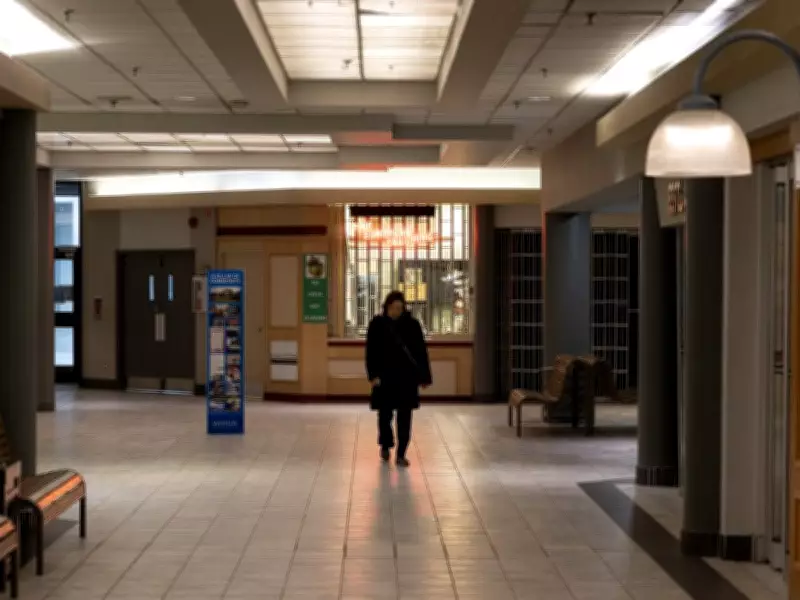
When Westgate Shopping Centre first opened to the public in 1955, it promised a futuristic shopping experience for Ottawa residents. For nearly 70 years, it served as a community hub, but changing retail patterns and the pandemic delivered fatal blows to its survival.
According to data from Deloitte, foot traffic in malls had been decreasing steadily even before the pandemic. A 2024 report from Cushman & Wakefield confirmed that shopping centres were the hardest hit of all retail spaces when COVID-19 lockdowns began. Westgate Mall struggled to recover from these combined pressures.
Before the pandemic, Wang worked eight and a half hours daily, six days a week. Post-pandemic, she reduced her hours significantly, operating from 10 a.m. to 5 p.m. and taking both Sunday and Monday off—a reflection of the diminished traffic and changing consumer habits.
The Human Impact: Lost Skills and Community Connections
Unlike many other tenants who sought alternative retail spaces, Wang opted to retire because equivalent space had become too expensive. She plans to take some work home for a select number of clients, but for the neighborhood, the loss represents more than just another store closure.
"She was the only person who could do invisible mending," says Victoria Fuller, a frequent and favorite customer of Wang's. "I began taking things to her and she was really good, really kind, and over the years we established a good connection. I don't know how you replace it and a lot of people don't have her skills."
Wang's specialty—invisible mending—involves the complicated weaving of threads to close holes, leaving no indication of any repair work. She has worked on sweaters over 100 years old, preserving sentimental pieces for their owners, and even received packages from as far as the Maritimes hoping to have new life brought to their clothing.
Community Mourns a Neighborhood Institution
For regular patrons, the loss of Westgate Mall represents a sad reality of changing retail landscapes. "It was an all-service type location," says Mary McGrath, who frequented the mall for close to 40 years.
Mary Ellen Hackett has tried visiting Carlingwood Mall, a similar enclosed shopping space a few kilometers down the road, but finds the loss of Westgate particularly difficult. "I'm a senior citizen, it's nice to be able to make the walk over," she explains. "I used to go here to get my haircut."
The Final Day: Closing a Chapter
Wang continued working until the last possible day, wanting to be there for customers who might need last-second alterations. On October 30, 2025, her sewing machines shut off for the final time at Westgate Shopping Centre.
Quietly, she began cleaning her store—extra pieces of denim, boxes of pins and buttons, bags of clothes and fabrics. She talked about all the lovely people she met over her career there, the relationships built stitch by stitch.

The next day, the sewing machines, leftover clothes, and tools were moved out of the mall. With the store gutted and her Fine European Tailoring neon sign still illuminated, Wang left behind years of hard work and relationships that defined not just her business, but a piece of Ottawa's retail history.
As Wang and her son Charles Zhao packed their car with the remnants of her business, they carried more than just physical objects—they carried memories of a community hub that served generations, and the end of an era for Ottawa's retail landscape.