Edmonton's controversial infill housing policy has taken a troubling turn, with reports emerging that some of the city's much-debated eight-plex developments are being utilized as makeshift rooming houses where individual rooms are rented out by the week, day, or even hour. This development has intensified existing community concerns about the impact of mid-block housing projects on established residential neighborhoods.
Neighborhood Character Under Threat
Imagine living in your home for four decades, maintaining its appearance and contributing to a cohesive community aesthetic, only to have a massive eight-plex development appear next door. This scenario is becoming increasingly common across Edmonton as the city council continues to promote infill development as a solution to urban sprawl. Residents now face the prospect of monolithic structures replacing single-family homes, with significantly increased traffic and population density altering the fundamental character of their streets.
The McKernan Case Study
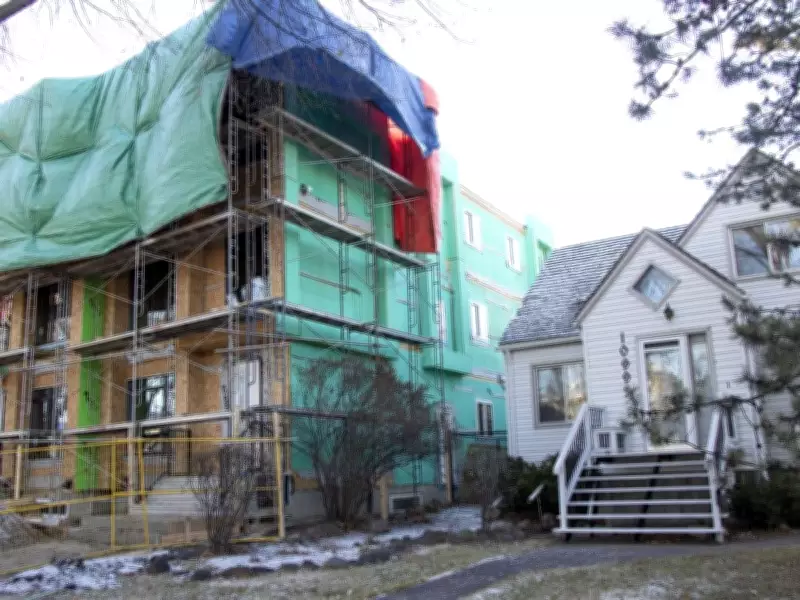
Following investigative reports by Global News, residents in the southside neighborhood of McKernan revealed disturbing details about a nearby eight-plex under construction. Rather than the expected eight residential units, neighbors discovered twenty-one separate rooms during a tour of the building, each equipped with individual sinks, toilets, and number-pad locks. This configuration suggests the property is being designed specifically for short-term room rentals rather than traditional residential occupancy.

The implications for neighboring homeowners are substantial:
- Significant reduction in privacy, with multiple units overlooking previously secluded yards and decks
- Increased vehicle congestion from potentially dozens of additional residents
- Constant comings and goings of transient occupants
- Potential negative impact on property values in established neighborhoods
Policy Versus Practical Reality
City council maintains that infill development is essential to prevent Edmonton from expanding its urban footprint as the population approaches two million residents. However, critics argue that the implementation has created unintended consequences that undermine both community interests and the policy's original objectives.
"Council clings to the idea that no matter how unpopular these mid-block developments are, they are necessary so our city doesn't increase its 'footprint,'" notes the original analysis. This philosophical commitment to densification appears to be overriding practical concerns about how these developments actually function within communities.
Economic Pressures Driving Unintended Outcomes
Developers facing challenging economics may be contributing to the problem. After purchasing expensive lots and constructing eight-plex buildings, some discover limited market demand for the units at projected price points, particularly given parking limitations. To recoup investments, property owners appear to be turning to alternative rental models that maximize occupancy but create neighborhood disruptions.
This situation reveals a fundamental disconnect between policy intentions and market realities. While the city promotes infill as creating affordable housing options, the economic pressures on developers may be producing housing models that serve neither long-term residents nor the stated goals of community integration.
Social Engineering or Practical Planning?
Beyond environmental considerations, some observers detect elements of social engineering in the infill push. There appears to be an underlying belief among certain council members that introducing more affordable housing options into established neighborhoods will address perceived inequalities in housing access. However, this approach has generated significant pushback from residents who feel their concerns about neighborhood preservation are being dismissed.
The controversy highlights the complex balancing act municipal governments face when attempting to address multiple urban challenges simultaneously. While preventing urban sprawl remains an important environmental objective, the Edmonton case demonstrates how implementation details can significantly impact community acceptance and policy effectiveness.

As the debate continues, Edmonton residents are left grappling with fundamental questions about urban development priorities, property rights, and the appropriate balance between individual neighborhood character and broader city planning objectives. The transformation of eight-plex developments into de facto rooming houses represents just one manifestation of these larger tensions playing out across the city's residential landscape.