B.C. Homeowner's Property Valued at $2 After Landslide Evacuations
A Chilliwack River Valley homeowner is making another attempt to secure government financial assistance after his property was ordered evacuated for the second time in four years due to landslide risks. The situation has left his home with a provincial assessment value of just $2, highlighting the severe impact of natural disasters on property owners in vulnerable areas.
Repeated Landslide Events Force Evacuations
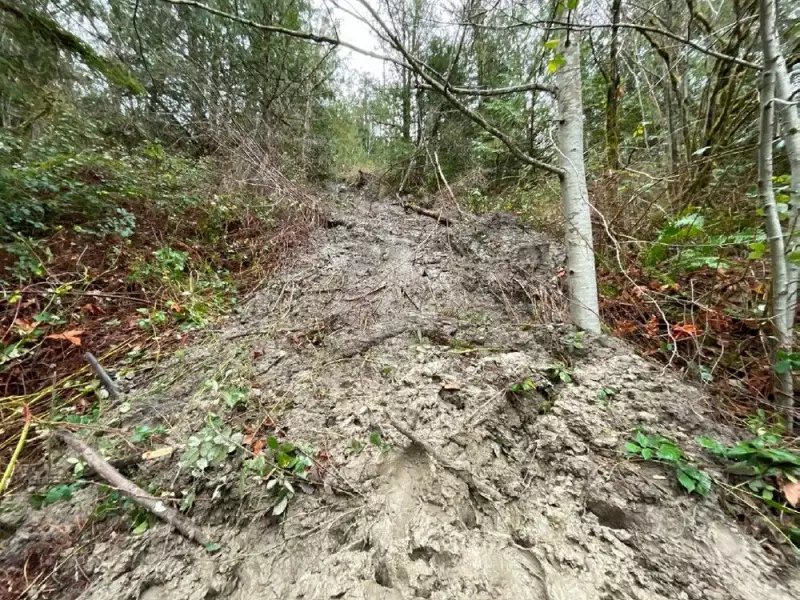
Chris Rampersad's property on Chilliwack Lake Road has experienced multiple landslide events triggered by heavy rainfall. In November 2021, a significant landslide caused billions of dollars in damage throughout British Columbia and rendered Rampersad's home unsafe for habitation. More recently, in December 2025, another landslide occurred on the property, resulting in a one-month evacuation order issued by the Fraser Valley Regional District that lasted until January 16.
The December landslide measured eight-to-twelve metres wide and sixty-to-seventy metres long, taking down trees and reaching the house itself, though it did not cause structural damage to the building. This pattern of repeated geological events has created an ongoing safety concern that prevents the homeowner from living in his residence.

Property Assessment Reflects Extreme Risk
Following the 2021 landslide event, the province's property assessor valued Rampersad's home at just $2, reflecting the extreme risk posed by the landslide-prone terrain. Despite this nominal valuation, Rampersad continues to pay mortgage payments on a property he cannot safely occupy, creating significant financial strain for him and his wife.
"I'm not sure if I'll get anything, but let's throw my name back in the bucket, see what answers I get," said Rampersad, expressing cautious optimism about his latest application for disaster assistance.
Changing Disaster Assistance Criteria
The federal government made significant changes to its disaster assistance rules last year, now allowing funding for homes that haven't been physically damaged but are no longer safe to live in due to increased landslide risk under specific conditions. In major disaster situations, federal funding typically flows through provincial channels.
Rampersad hopes the province will revise its disaster aid criteria to align with these federal changes, potentially opening the door for assistance that was previously unavailable. Following the 2021 landslide, his application for disaster assistance was rejected because the landslide hadn't directly damaged the house structure.
Government Review and Political Support
The B.C. Emergency Management and Climate Readiness Ministry confirmed it is reviewing regulations as part of its modernization of the Emergency and Disaster Management Act, including disaster assistance provisions in light of changes to the federal disaster aid program.
"This review is still underway," stated the ministry in an email from public affairs officer Surbhi Sharma, indicating that policy changes may be forthcoming.
Rampersad has received offers of assistance from B.C. Conservative Chilliwack-Cultus Lake MLA Á'a:líya Warbus's office and Patti MacAhonic, an elected director for the regional district representing the Chilliwack River Valley. This political support provides some encouragement as he navigates the complex application process.
Long-Term Impact on Homeowners
The situation highlights broader concerns about how governments address property owners facing geological risks that render their homes essentially worthless. Rampersad and his wife have been dealing with this challenging situation for nearly five years, with the property's risk deemed unfixable by authorities.
"On a personal level, my wife and I, we feel like this is the year to get this done ... Five years is so long," Rampersad expressed, emphasizing the emotional and financial toll of the prolonged uncertainty.
As climate change potentially increases the frequency and severity of extreme weather events in British Columbia, cases like Rampersad's may become more common, testing existing disaster assistance frameworks and property valuation systems in geologically vulnerable regions.