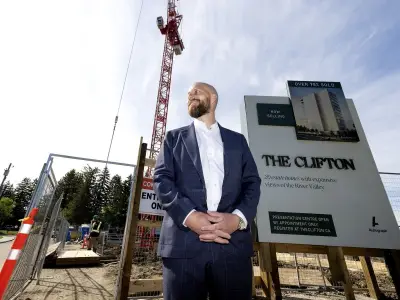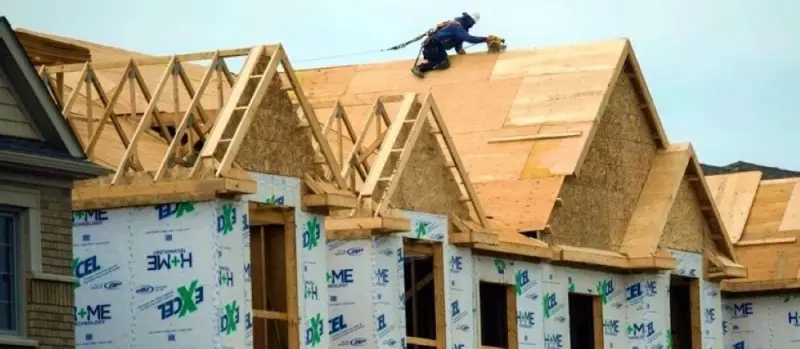
In a stark contrast highlighting regional economic disparities, Alberta celebrated a second consecutive record-breaking year for housing starts in 2025, while Ontario experienced its fourth straight year of decline. The western province's surge and central Canada's slump underscore divergent approaches to housing policy and market dynamics.
Alberta's Construction Boom Sets New Records
Alberta broke ground on an impressive 54,858 new homes in 2025, representing a substantial 14% increase from its previous record of 47,827 units set in 2024. This remarkable growth positioned Alberta as the national leader in per-capita housing starts, with the province accounting for more than one in five housing starts across Canada despite representing only about 12% of the country's population.
"What that tells me is this: Alberta is obviously on a hot streak, but that does not happen by accident," declared Alberta Housing Minister Jason Nixon during a recent update on provincial housing numbers. "It's the result of concentrated efforts by the government of Alberta and our partners."

Strategic Policy Decisions Fuel Growth
Minister Nixon attributed Alberta's success to deliberate policy choices focused on reducing regulatory barriers and increasing housing supply. "We figured out pretty early that the housing problem we were dealing with was a supply problem," he explained, emphasizing that provincial efforts have concentrated on "making sure our industry could actually build, and that we were removing barriers at all levels of government."
The province has also expanded rental assistance programs to help low-income residents secure rental units, creating a more comprehensive approach to housing affordability.
Ontario's Persistent Housing Slump
While Alberta soared, Ontario housing starts declined for the fourth consecutive year in 2025, falling to 65,376 units—a significant 12% drop from the 74,573 units started in 2024. This downward trend persists despite Premier Doug Ford's 2022 election campaign pledge to build 1.5 million homes over ten years, a target of which only one-tenth has been delivered to date.
Regulatory Challenges and Development Costs
Toronto-based housing advocate Eric Lombardi identified multiple factors contributing to Ontario's housing challenges. "Red tape is an issue in Ontario, along with levies that municipalities place on builders before they even get started," Lombardi noted, pointing out that in the Greater Toronto Area, development fees can add more than $100,000 to the cost of building a new home.
"The economics of why development charges drag down housing stock are pretty simple," Lombardi explained. "Once you start to add additional charges onto a new thing that are not reflected in what it actually costs to build said thing, you're going to see a mismatch between supply and demand."
Ontario homebuyers also face a 13% Harmonized Sales Tax on new homes, though rebates are available, while Alberta remains the only province without a provincial sales tax—a significant competitive advantage in housing affordability.
Interprovincial Migration Patterns
A substantial portion of Alberta's housing demand originates from Ontario itself, according to housing expert Mike Moffatt. The province's "Alberta is calling" campaign, launched in 2022 to attract young Ontario families westward, has proven remarkably effective, with tens of thousands of Ontarians responding to the invitation.
"A lot of the people who were coming to Alberta tended to be younger, higher-income families, who would just naturally consume more housing than the average interprovincial migrant," Moffatt observed, highlighting how demographic shifts contribute to housing demand patterns.

Federal Policy Context
The housing numbers emerge against a backdrop of federal policy debates. Conservative housing critic Scott Aitchison pointed to the contrast between Alberta's success and what he characterized as Liberal government inaction. "We've said all along that the cost and the pace of government is what's slowing down housing in this country," Aitchison stated, referencing unfulfilled campaign promises regarding development charge reductions and GST waivers for first-time homebuyers.
Aitchison emphasized the fundamental challenge: "Fundamentally, it's a very simple problem: the places where it's the slowest, most painful and most expensive to build are the places that are getting nothing built."
Looking Ahead: Lessons and Cautions
While Alberta's current boom appears robust, housing experts caution that the province's housing surge may eventually cool. Moffatt suggested that Ontario's numbers could be partially explained by different migration patterns, including foreign students and international migrants who typically consume less housing.
Nevertheless, Ontario could benefit from examining Alberta's approach to housing development. "(Alberta) shows the importance of keeping development charges, as well as things like HST, down to a manageable level," Moffatt advised, noting that sales taxes on new homes essentially function as construction taxes that discourage development.
The contrasting trajectories of Alberta and Ontario housing markets reveal how provincial policies, regulatory environments, and economic conditions collectively shape housing outcomes across Canada's diverse regions.