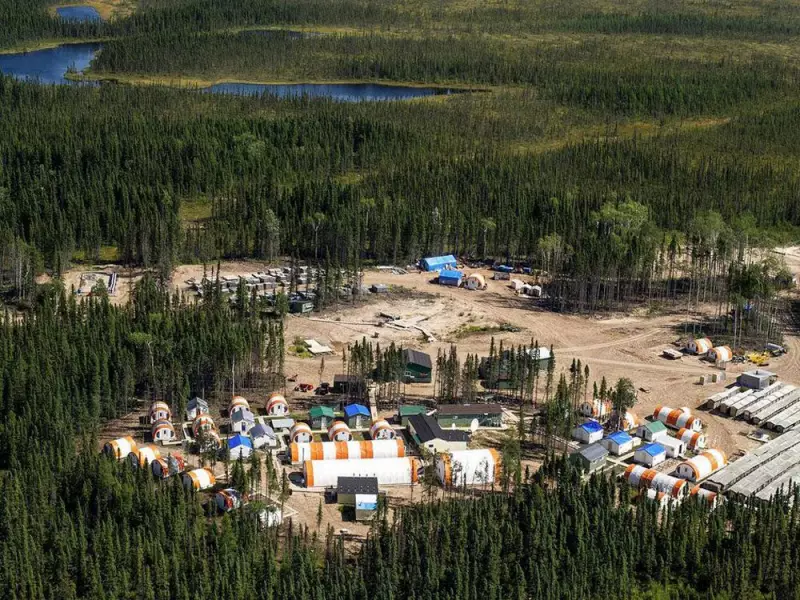
In a move aimed at revitalizing Canada's sluggish economic growth, the federal government has signed agreements with Ontario, New Brunswick, and Alberta to accelerate the approval of major infrastructure projects. The pacts, announced on Thursday, target the notoriously slow regulatory process for mines, pipelines, and other significant developments.
A Long-Overdue Step Forward
The agreement between Ontario Premier Doug Ford and Prime Minister Mark Carney is a direct response to a problem decades in the making. It aims to create a single, coordinated review process to replace the current system where provincial and federal governments conduct separate environmental assessments. This duplication has been a major bottleneck, with projects like mines in Ontario's mineral-rich Ring of Fire facing timelines of 15 to 20 years from inception to operation.
Analysts argue that such protracted delays create crippling uncertainty for private investors, discouraging the capital investment essential for economic expansion. This regulatory inertia has not only stalled mining but has also severely hampered the approval of cross-country oil and natural gas pipelines.

The High Cost of Bureaucratic Delay
The economic consequences of these delays are stark. Over the past decade, Canada has recorded the worst economic growth among G7 nations when measured by inflation-adjusted GDP per capita, a key indicator of living standards. Forecasts are equally grim, projecting Canada to have the weakest growth from 2020 to 2060 among the 38 industrialized countries of the Organisation for Economic Co-operation and Development (OECD).
While the new agreements are widely seen as a positive step, observers note that the impetus for change came partly from external pressure, including past trade tensions with the United States. The deals are a recognition that the status quo is unsustainable for national prosperity.
Significant Hurdles Remain on the Path
Despite this progress, formidable obstacles persist. The streamlined federal-provincial process does not eliminate other critical approval stages. Two of the most significant remaining challenges involve Indigenous consultation and interprovincial coordination.
For projects crossing Indigenous lands, the legal duty to consult and accommodate remains, though it is not intended as a veto. Determining when this requirement is satisfactorily met can add years to a project's timeline. Similarly, initiatives spanning provincial borders require approvals from multiple jurisdictions, introducing another layer of complexity and potential delay.
The success of these new agreements will ultimately be measured by their ability to translate promised efficiency into shovels in the ground and sustained economic investment for Canada's future.