Saskatchewan's Monumental Alumina Discovery Set to Reshape North American Mining Landscape
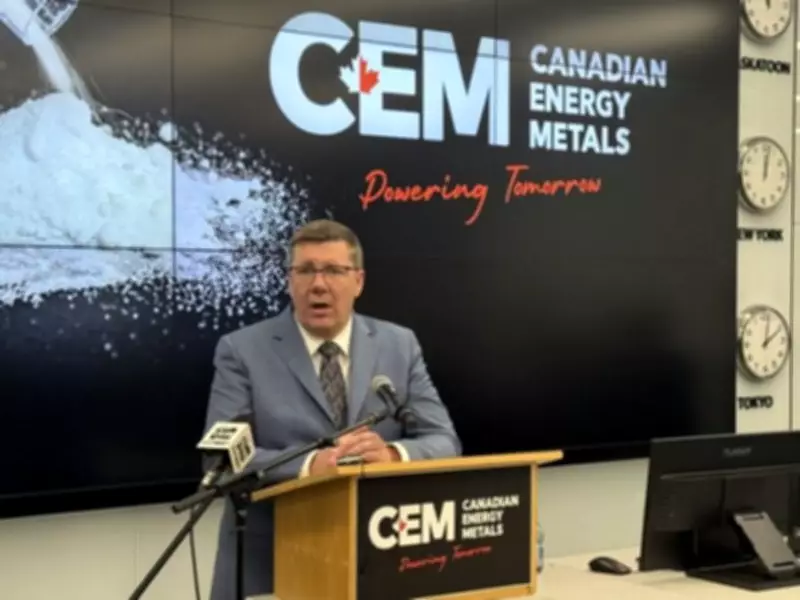
Saskatchewan Premier Scott Moe has declared that a groundbreaking discovery of 6.8 billion tonnes of alumina near Tisdale could prove as economically transformative for the province as its legendary uranium and potash industries. This massive deposit represents approximately one-third of the world's known alumina supply, positioning Saskatchewan at the forefront of North American critical mineral development.
A Deposit of Unprecedented Scale
Christopher Hopkins, president and CEO of Canadian Energy Metals Corp, revealed the staggering dimensions of the Thor mining project where the alumina was discovered. "When we discuss 6.8 billion tonnes of alumina, that's the aluminum content within an ore body of roughly 50 billion tons," Hopkins explained. "This resource is contained within a project area spanning approximately 230 square miles - a footprint that would fit comfortably within the metropolitan area of Edmonton."
The discovery represents a remarkable achievement in mineral exploration. Hopkins noted that the initial discovery hole was drilled only 50 feet down in May 2022, and within just 40 months, this hidden resource has progressed to "a point of economic feasibility."

Strategic Importance for National Security
Premier Moe emphasized the strategic significance of this discovery for both Canadian and NATO security interests. "Minerals like scandium, vanadium and alumina will create security and stability for the Department of National Defence in Canada and NATO countries when it comes to aerospace and military applications," Moe stated.
He further explained that in an era of uncertain global partnerships, domestic access to critical minerals strengthens trade relationships and enhances national security. Alumina, a chemical compound of aluminum, serves as one of the world's most versatile metals, with applications ranging from airplanes and electric vehicles to batteries, rocket ships, and industrial strengthening of glass and metals.
Economic Diversification and Growth
The premier highlighted how this discovery aligns with Saskatchewan's broader economic strategy. "The diversification of our provincial economy, particularly our mining sector beyond the traditional dominance of potash and uranium, is something our government is intensely focused on supporting alongside industry and investment attraction," Moe said.
Saskatchewan already leads Canada in mining investment, with $7 billion invested in the province during 2025. The Thor project promises to generate substantial employment opportunities for both Saskatoon and Tisdale communities.
Transforming Mineral Production
The provincial government has established ambitious goals to double the number of critical minerals produced in Saskatchewan from three to six. "Another objective in our strategy aims to increase our share of national exploration expenditures to 15 percent," Moe noted. "We successfully met that target in 2025. Saskatchewan possesses precisely what the world requires."
Hopkins described the transition from traditional bauxite sources to green alumina production as "truly transformational." The project is expected to span several years, with a demonstration plan currently being designed as mine resources undergo evaluation over the coming year.
This monumental discovery positions Saskatchewan not merely as a regional mining powerhouse but as a crucial player in North America's strategic mineral supply chain, potentially reducing dependence on foreign sources while creating economic opportunities for generations to come.