Labrador Gold Announces Strategic Joint Venture for Watson Project Exploration
Labrador Gold Corp. has officially entered into a significant partnership to advance mineral exploration in northwestern Ontario. The company has signed a Letter Agreement dated February 9, 2026, to form a corporate joint venture with Nemo Resources Inc. through a private exploration entity, Elementary Minerals Inc. This collaboration focuses on the Watson Project, a substantial landholding in the eastern Fort Hope greenstone belt.
Key Details of the Joint Venture Agreement
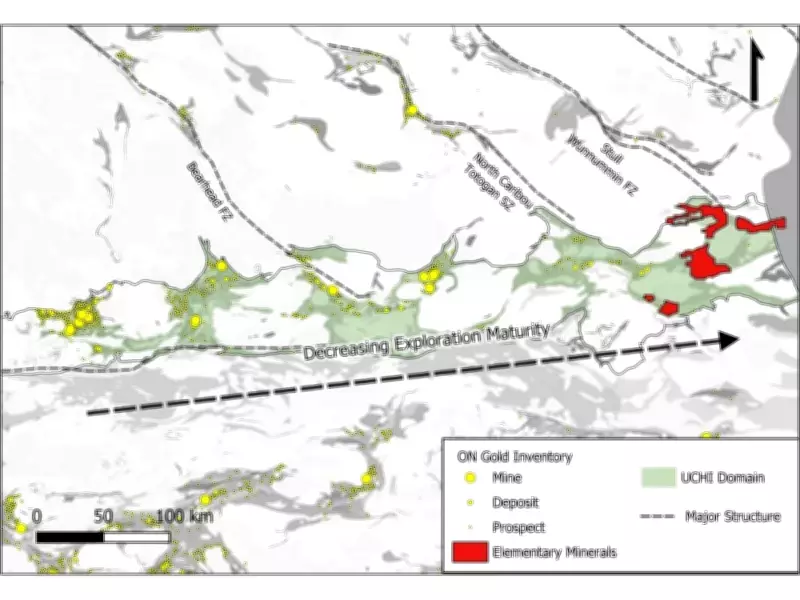
The joint venture involves Elementary Minerals Inc., which has acquired 127,100 hectares of mineral claims through map staking. This area represents the largest landholding in the Fort Hope greenstone belt, a region that has historically been underexplored compared to other prolific areas in Ontario. The agreement is structured to leverage the combined technical expertise of both Labrador Gold and Nemo Resources, with Nemo designated as the operator of the joint venture.
Work programs will be overseen by a Technical Committee comprising two representatives from Labrador Gold and one from Nemo. This committee will approve exploration activities, ensuring a systematic and collaborative approach. Elementary Minerals is currently developing its 2026 exploration plans, which are expected to include a substantial airborne survey followed by soil sampling, aimed at identifying large gold deposits.

Highlights of the Watson Project
- The Watson Project covers 127,100 hectares in the Fort Hope greenstone belt, part of the Uchi Subprovince in northwestern Ontario.
- This region is significantly underexplored relative to nearby greenstone belts like Red Lake and Pickle Lake, which have a long history of gold production.
- While the primary focus is on gold exploration, the project also holds potential for critical minerals, including antimony, nickel, copper, and zinc.
- Elementary Minerals owns the land 100% free of royalties, with no option payments or work commitments, providing flexibility for exploration.
- The proposed road to the Ring of Fire, expected to begin construction in mid-2026, runs through the Watson property. Once completed, this infrastructure will substantially reduce exploration and development costs.
Geological Significance and Exploration Potential
The Fort Hope greenstone belt features Archean geology typical of greenstone belts, with mafic and felsic volcanic rocks, sedimentary sequences, and intrusions of felsic to intermediate plutonic rocks. A key geological feature is the presence of tightly folded and faulted banded iron formation (BIF), which hosts significant gold occurrences in the western portion of the belt. However, the eastern portion, where the Watson Project is located, has not been drill-tested, presenting a notable opportunity for discovery.
Precambrian BIF-hosted gold mineralization is known for some of Canada's largest and highest-grade deposits, such as the Lupin Gold Mine and Musselwhite Gold Mine. This geological context underscores the high potential of the Watson Project for uncovering substantial gold resources, making it a strategic focus for the joint venture.
Strategic Implications and Future Outlook
This joint venture marks a strategic move by Labrador Gold to expand its exploration footprint in a promising yet overlooked region. By partnering with Nemo Resources, the company aims to accelerate exploration efforts and capitalize on the untapped potential of the Fort Hope greenstone belt. The collaboration is expected to drive systematic exploration, leveraging advanced techniques to identify and develop gold deposits efficiently.
With exploration plans set to commence in 2026, the joint venture is poised to make significant strides in assessing the Watson Project's mineral wealth. The involvement of both companies' technical teams, combined with favorable infrastructure developments, positions this initiative as a key player in Ontario's mining sector, potentially contributing to regional economic growth and resource development.