The Canadian federal government has significantly broadened the scope of its Critical Mineral Exploration Tax Credit (CMETC), adding twelve new minerals to the list of resources eligible for enhanced financial incentives. This strategic move is poised to catalyze a fresh wave of exploration activity from coast to coast, according to industry experts.
Expanding the Incentive for Exploration
Introduced in 2022, the CMETC offers a substantial 30 per cent tax credit to investors who finance the search for minerals deemed essential to Canada's clean energy and technology supply chains. The recent expansion, detailed in the 2025 federal budget, now includes bismuth, cesium, chromium, fluorspar, germanium, indium, manganese, molybdenum, niobium, tantalum, tin, and tungsten.
Michael Long, a tax partner at KPMG and a long-time advocate for this change, emphasized the impact. "By including these additional 12 minerals, the government has made exploring for these critical minerals more attractive," Long stated. He explained that the expansion will primarily assist junior mining companies in accessing crucial capital from equity markets, specifically for exploring these newly listed minerals.

How the Tax Credit Drives Investment
The incentive operates within Canada's unique flow-through share system. This mechanism allows mining companies to pass exploration deductions on to their investors.
"An individual investor provides the funding to a mining company," Long elaborated. "The company spends that money on qualifying exploration and then renounces or passes those deductions to the investor. So, if an investor gives a mining company $100, that company spends it exploring for minerals — and the investor can deduct the $100 as an exploration expense on their personal tax return."
The CMETC builds upon this by adding a significant tax credit sweetener. While the general Mineral Exploration Tax Credit (METC) provides a 15 per cent credit for exploration spending on precious metals like gold, the CMETC doubles that incentive to 30 per cent for designated critical minerals.
"The effect is that those minerals will be more attractive when it comes to raising capital," said Long. "It’s high-risk, grassroots exploration — so every bit of incentive helps attract financing."
High Stakes and National Strategy
The need for such incentives is clear, given the inherent risks of mineral exploration. The Prospectors and Developers Association of Canada (PDAC) highlighted in its 2025 pre-budget submission that a mere 0.01 per cent of mineral prospects ever become producing mines. Furthermore, the journey from discovery to mine construction is a marathon, taking an average of 27 years due to complex permitting and regulatory hurdles.
Despite these challenges, the flow-through share system has been a cornerstone of Canadian exploration finance. PDAC noted that this system, which underpins both the CMETC and the broader METC, has been responsible for generating more than two-thirds of all domestic exploration spending over the last decade.
Long connected the policy expansion directly to the federal government's overarching critical minerals strategy. This strategy identifies resources vital for Canada's transition to a clean economy, as well as for national defence and advanced manufacturing.
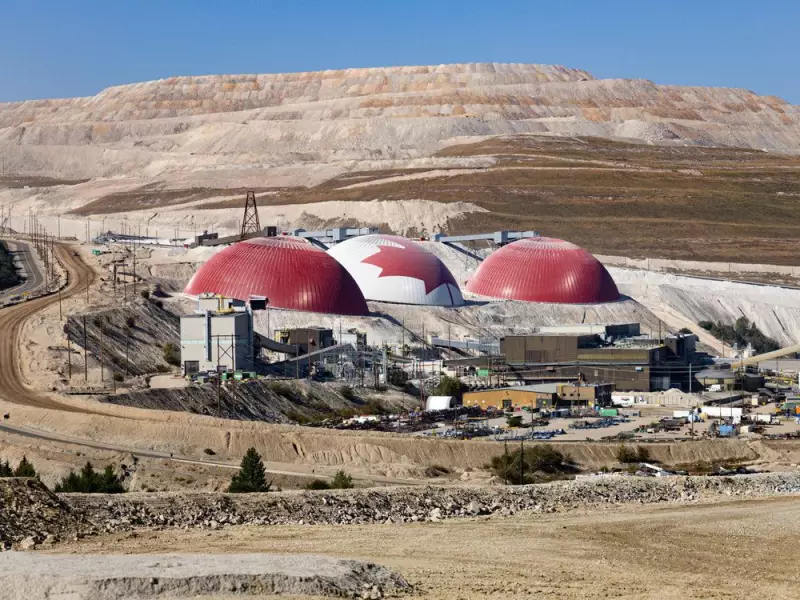
"The minerals listed help support the clean economy transition, semiconductors, and defence energy," he said. "There’s a reason they’re on the critical minerals list — and the government is saying, 'we want to attract more exploration for these 12 minerals.'" This enhancement effectively "puts more pins in the cushion," broadening the focus of exploration efforts across the nation and potentially unlocking new deposits in known mining areas like the Highland Valley Copper mine in British Columbia, which contains molybdenum.