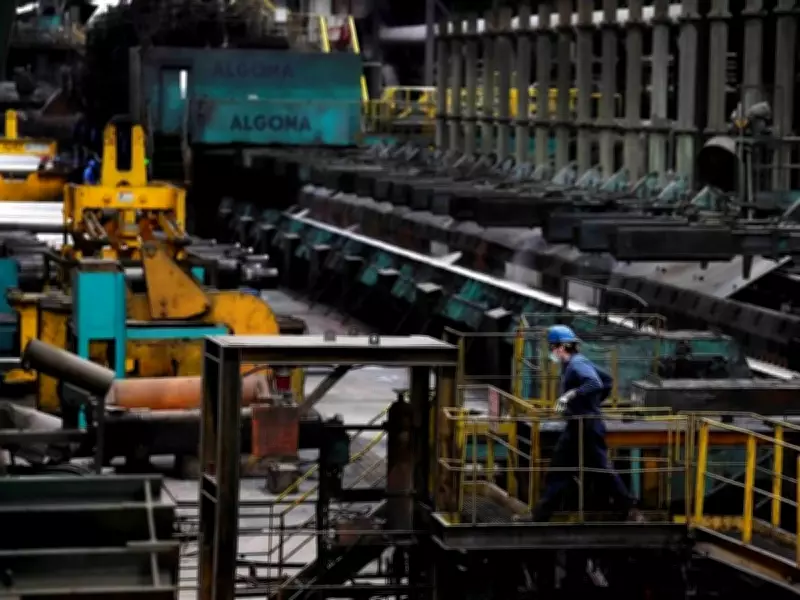
Algoma Steel's Losses Deepen Amid U.S. Tariffs and Canadian Market Pivot
Algoma Steel Inc. faced a significant financial setback in the fourth quarter, reporting a net loss of $364.7 million. This downturn is largely attributed to the ongoing trade tensions between the United States and Canada, which have imposed substantial tariffs and disrupted sales in what was once the company's largest market.
Impact of U.S. Tariffs on Financial Performance
The United States' imposition of a 50 percent tariff on Canadian steel has had a profound effect on Algoma Steel. During the quarter, the company incurred $60.6 million in direct tariff fees, with the annual total reaching $225 million. This financial burden was compounded by a sharp decline in shipments to the U.S., which fell to just 45 percent of Algoma's total transactions for the period.
In response to these challenges, Algoma Steel announced a strategic pivot to focus on the Canadian market in 2025. However, this shift came with its own set of difficulties, as the company received lower prices for its products in Canada. Revenue for the quarter dropped to $455 million, marking a 22 percent decrease compared to the previous year.

"Canadian transactional pricing during the quarter was up to 40 percent lower than comparable U.S. levels across many product categories, reducing revenue by approximately $27 million," the company stated in its earnings release.
Annual Financial Results and Continued Losses
The financial struggles extended throughout the year, with Algoma's revenue for 2025 declining to $2 billion, a 15 percent drop. Shipments also fell by 14 percent to 1.74 million tons. This resulted in a net loss of $984.9 million for the year, marking the second consecutive year of losses, following a $139 million loss in 2024.
Despite these significant losses, Algoma Steel remains solvent. Chief Executive Rajat Marwah, who took over after Michael Garcia retired on January 1, described the fourth quarter as a "pivotal moment" for the company.
Accelerated Transition to Electric Arc Furnace
In a move to adapt to the changing market conditions, Algoma Steel has accelerated its transition from a coal-fired blast furnace to an electric arc furnace (EAF). Originally planned for 2027, this transition was moved up by approximately two years due to the impact of U.S. tariffs. The shift is expected to lower the company's overall carbon emissions and provide greater flexibility in matching production with demand.
"Successfully producing high-quality sustainable steel from the EAF at scale represents a critical milestone in our multi-year transition and reinforces our confidence in the long-term benefits of the new operating platform," Marwah said in a statement.
As part of this transition, Algoma laid off more than 1,000 employees in December. The company now plans to focus on producing discrete plate, becoming the only company in Canada to do so, while winding down its coil production.
Future Prospects and Financial Support
Looking ahead, Algoma Steel expects to achieve an annual raw steel production capacity of approximately 3.7 million tons, with carbon emissions projected to fall by around 70 percent. To support its near-term financial flexibility, the company secured a $500 million loan from the federal and provincial governments last year.
In January, Algoma announced a memorandum of understanding with South Korea's Hanwha Ocean Co. Ltd. This agreement includes US$200 million for the development of Canada's first structural steel beam mill and an additional US$50 million in anticipated product purchases. However, this deal is contingent on Hanwha winning a contract to build up to 12 submarines for the Canadian military.
At the end of the fourth quarter, Algoma Steel had $77.5 million in cash, $194.5 million in unused availability under a revolving credit facility, and $417 million available to draw from its federal and provincial loans.