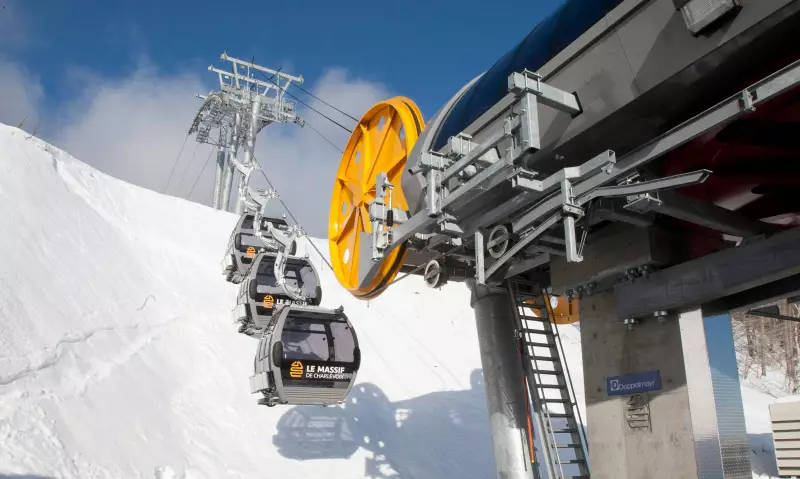
The future of one of Quebec's premier ski destinations hangs in the balance. Le Massif de Charlevoix has announced it will be forced to close its operations if a new collective agreement is not successfully negotiated with its unionized employees by January 20, 2026. This deadline places immense pressure on both management and the union to find common ground and avert a shutdown that would impact the regional economy during the peak winter season.
A Looming Deadline for a Quebec Icon
Located in Petite-Rivière-Saint-François, Quebec, Le Massif de Charlevoix is renowned for its spectacular views of the St. Lawrence River and its significant vertical drop. The resort's potential closure represents a major threat to the Charlevoix region's winter tourism sector. The announcement, reported by The Canadian Press on January 17, 2026, sets a hard deadline of just days for negotiations to conclude. The resort has not publicly detailed the specific points of contention in the talks, but the implication is clear: without a deal, the gondolas will stop running and the slopes will sit empty.
Potential Ripple Effects on the Region
The closure of a resort of this scale would have consequences far beyond its own gates. Local businesses, including hotels, restaurants, rental shops, and other service providers that rely on the influx of skiers and visitors, would face immediate financial hardship. Seasonal employment for hundreds of workers is also directly at stake. The timing is particularly severe, as the January deadline falls in the heart of the lucrative ski season, a period critical for annual revenue. The situation underscores the fragile interdependence within tourism-dependent communities.

The Path Forward: Negotiation or Shutdown
All eyes are now on the bargaining table. Both parties have a strong incentive to reach an agreement before the January 20 cutoff. For the union, securing fair terms for its members is paramount. For management, avoiding an operational shutdown that would damage the resort's reputation, customer relationships, and financial stability is the clear priority. The coming days will be decisive in determining whether Le Massif de Charlevoix remains open for business or becomes a casualty of a stalled labour negotiation. The outcome will serve as a significant case study for labour relations within Canada's seasonal tourism industry.