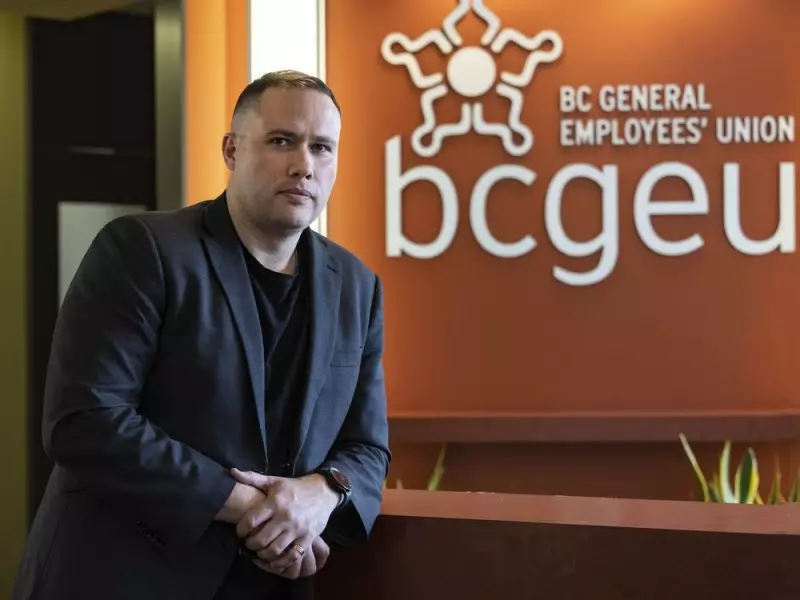
A former senior leader of one of British Columbia's largest unions has launched a civil lawsuit, alleging he was forced out of his high-ranking position in a case of constructive dismissal. The legal action, filed in the B.C. Supreme Court, pits former BCGEU vice-president Douglas Dykens against the union and its president, Paul Finch, revealing internal strife at the organization.
Allegations of Centralized Control and a Toxic Environment
According to a notice of civil claim filed on January 5, 2026, Douglas Dykens asserts that his employment with the B.C. General Employees' Union was fundamentally undermined following the election of Paul Finch as president in June 2024. Dykens, who began full-time work with the union in 2006 and rose to become one of its four vice-presidents, claims Finch began "centralizing control" over areas that were previously under Dykens's authority.
The court documents allege that Finch "fundamentally deteriorated the plaintiff's autonomy and authority" over time. Furthermore, Dykens accuses the union president of creating a hostile work environment, which included swearing and raising his voice at him. The claim states that "Mr. Finch repeatedly undermined and embarrassed the plaintiff, often in front of other BCGEU staff or external third parties." Dykens contends that this treatment ultimately led to his departure from his $190,000-a-year job in May 2025, which he defines as a constructive dismissal.

The Union's Defense and Counter-Allegations
In its formal response to the lawsuit, the BCGEU has vigorously disputed the allegations put forward by Dykens. The union denies that it constructively dismissed him or significantly altered his role without cause. Instead, the BCGEU states that President Finch provided "clear written expectations" to excluded staff, including Dykens, as part of a decentralization effort aimed at better serving the union's membership.
The union's defense argues that any modifications to Dykens's duties were "consistent with the right of the BCGEU to make changes from time to time for the better representation of its more than 95,000 members." Strikingly, the BCGEU's court filing turns the tables by alleging that Dykens's own conduct became problematic. The response claims that during private caucuses of the bargaining committee in late January 2024, Dykens's behavior "became increasingly disrespectful and problematic." Dykens had been part of the committee that successfully negotiated a new collective agreement with the provincial government, ratified in November 2025.
Understanding Constructive Dismissal and Legal Implications
At the heart of this legal battle is the concept of constructive dismissal. This occurs not when an employee is directly fired, but when an employer fails to comply with the employment contract in a major way or unilaterally changes the fundamental terms of employment, effectively forcing the employee to resign. The court will need to determine whether the changes Dykens experienced in his role, autonomy, and work environment were severe enough to constitute a repudiation of his employment contract by the BCGEU.
The outcome of this case could have significant implications for labor relations within large unions and set a precedent regarding the authority of newly elected union leadership to restructure their organizations. It publicly airs internal governance disputes that are typically kept behind closed doors, putting the spotlight on the BCGEU's internal dynamics during a period of leadership transition and major bargaining.