

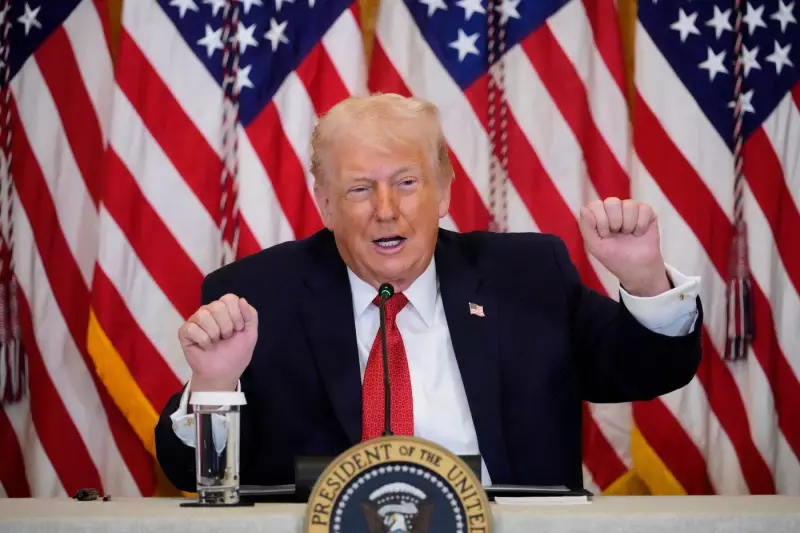
In a statement that has reignited debate over his unconventional foreign policy, former U.S. President Donald Trump has suggested he may use punitive trade measures against nations that do not back American control of Greenland. The remarks, reported on January 16, 2026, and updated January 17, 2026, underscore a continuing "all or nothing" strategy toward the Arctic territory.
A Renewed Push for Greenland
The concept of the United States acquiring Greenland, a vast, strategically located autonomous territory within the Kingdom of Denmark, is not new to Trump's political playbook. However, his latest comments introduce a more coercive economic dimension. Trump explicitly stated, "I may put a tariff on countries if they don’t go along with Greenland," framing international support as a condition for avoiding trade penalties.
This approach treats diplomatic alignment on a geopolitical aspiration as a transactional issue, potentially leveraging U.S. economic power to sway global opinion. The threat targets any nation that might oppose or hesitate to endorse a shift in sovereignty over the island, which is rich in natural resources and holds growing importance for Arctic security and shipping routes.

Deepening Cracks in International Alliances
Analysts note that this stance on Greenland is more than an isolated policy quirk; it acts as a stress test for Western unity. The report references a "Greenland rift" that is exposing deepening cracks within NATO. Key allies, including Canada and European members, have historically been skeptical or outright opposed to the idea of transferring Greenland's sovereignty.
For Canada, a nation with significant Arctic interests and sovereignty claims of its own, the proposition and the accompanying threat of tariffs present a complex diplomatic challenge. It forces a choice between supporting a key ally's controversial ambition or facing potential economic repercussions, all while managing its own relationship with Denmark and the people of Greenland.
Broader Implications and the 'All or Nothing' Legacy
Trump's revived interest in Greenland and his method of pursuing it through tariff threats reflect a broader, zero-sum philosophy toward international negotiations. This "all or nothing' approach" characterized much of his previous term, applying pressure on friends and adversaries alike to concede to American demands.
The threat also arrives amidst other significant global headlines, including a tragic report of a family in Iran searching for a protester's body, and domestic Canadian issues ranging from tuberculosis cases in Montreal to parking bans in Waterloo. However, the geopolitical ramifications of using trade as a weapon for territorial ambition stand out for their potential to destabilize long-standing alliances and international trade norms.
As the 2026 political landscape takes shape, this declaration serves as a reminder of the potent and unpredictable mix of economic policy and geopolitics that defined the Trump presidency, signaling its potential return to the forefront of global affairs.






