

Trump's Bridge Blockade Threat Over Canadian Trade Practices
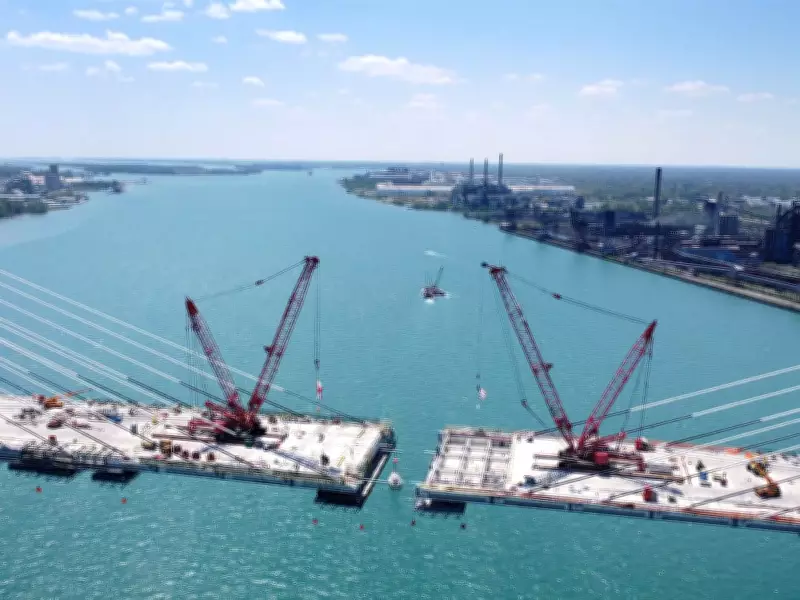
Former U.S. President Donald Trump has issued a stark warning regarding the Gordie Howe International Bridge, threatening to prevent its opening unless Canada addresses what he describes as decades of unfair treatment toward the United States. The controversial statement came via Trump's Truth Social platform on Monday, February 10, 2026, targeting the critical Windsor-Detroit crossing that represents one of North America's most significant infrastructure projects.
Unpacking Trump's Claims About Canadian Ownership
In a detailed 300-word social media post, Trump asserted that Canada owns both sides of the international bridge and constructed the project with minimal American involvement. He specifically claimed that "Canada has treated the United States very unfairly for decades" and that the bridge was built "with virtually no U.S. content." These statements form the foundation of his threat to block the bridge's operational commencement.
However, the reality of ownership and financing tells a more nuanced story. While Canada indeed funded the majority of the $6.4-billion project, the 2012 Canada-Michigan Crossing Agreement establishes joint public ownership between Canada and Michigan. This agreement creates an International Authority with equal representation from both jurisdictions, contradicting Trump's assertion of exclusive Canadian control.

Examining the Financial Contributions
Records reveal that Canadian taxpayers bore the primary financial burden for the Gordie Howe International Bridge, with Michigan's Department of Transportation contributing approximately US$85.8 million in 2019 for roadway construction on the American side. Additionally, the U.S. federal government allocated US$15 million for inspection and screening systems as part of broader legislation signed during Trump's initial presidential term.
The financing arrangement includes a unique toll collection system where all revenue will be gathered on the Canadian side and utilized to reimburse the Canadian government for its substantial investment. This structure reflects the disproportionate financial commitment Canada made to ensure the vital trade corridor's completion.
Trade Grievances Beyond Infrastructure
Trump's bridge threat extends beyond infrastructure concerns to encompass broader trade disputes between the neighboring nations. His social media post highlighted several specific grievances:
- Ontario's ongoing boycott of U.S. alcohol imports
- Canadian dairy tariffs that limit American agricultural exports
- Unsubstantiated claims about a potential Canada-China trade deal that would "terminate ALL Ice Hockey being played in Canada, and permanently eliminate The Stanley Cup"
These allegations, particularly regarding hockey's elimination, appear disconnected from actual trade negotiations and reflect Trump's characteristic rhetorical style. While dairy tariffs remain a legitimate point of contention, U.S. dairy exports rarely reach levels that would trigger the highest tariff rates. Similarly, Ontario maintains its alcohol import restrictions without immediate plans for reversal.
The Steel Sourcing Reality
Construction materials present another area where Trump's claims require clarification. The international agreement mandated that all bridge steel originate from either Canada or the United States, but procurement records indicate that Canadian companies supplied the majority of this critical material. This sourcing pattern, while technically compliant with the agreement, fuels perceptions of limited American economic benefit from the project.
Trump concluded his social media statement with a clear ultimatum: "I will not allow this bridge to open until the United States is fully compensated for everything we have given them, and also, importantly, Canada treats the United States with the Fairness and Respect that we deserve." He further suggested that the United States should "own, perhaps, at least one half of this asset" given historical support for Canada.

Broader Implications for Canada-U.S. Relations
This bridge controversy emerges within the complex tapestry of North American trade relations, where infrastructure projects often become symbolic battlegrounds for broader economic disagreements. The Gordie Howe International Bridge represents more than just a physical connection between Windsor and Detroit—it embodies the intricate interdependence of the Canadian and American economies.
As political rhetoric escalates, the actual operational timeline for the critical trade corridor remains uncertain. The bridge's completion represents a monumental engineering achievement, but its opening now faces potential political obstacles that could impact cross-border commerce and diplomatic relations between the two nations.





