

Trump's Tariff Threats Heighten Uncertainty Ahead of Critical CUSMA Review
Former U.S. President Donald Trump's renewed tariff threats against Canada have created significant uncertainty as the United States, Canada, and Mexico prepare for a crucial review of their trilateral trade agreement this year. The latest escalation comes at a particularly sensitive time, with the mandatory review of the Canada-United States-Mexico Agreement (CUSMA) looming on the horizon.
Threats Over China Relations Spark Trade Tensions
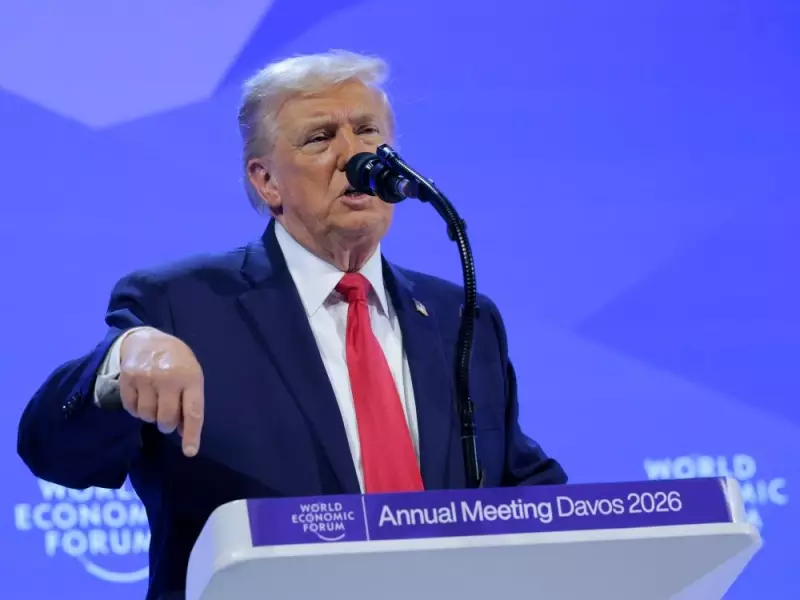
On Saturday, Trump specifically criticized Canada's economic engagement with China, warning that Prime Minister Mark Carney would be "sorely mistaken" to believe the United States would permit Canada to serve as a "drop off port" for Chinese goods. The former president threatened imposing 100 percent tariffs on Canadian products should Ottawa pursue a trade agreement with Beijing.
Canadian officials have responded swiftly to these assertions. Dominic LeBlanc, Canada's minister responsible for U.S. trade relations, clarified that there is "no pursuit of a free trade agreement with China." LeBlanc characterized the recent limited agreement between Canada and China as focused on resolving existing tariff disputes, while emphasizing the strength of the U.S.-Canada relationship as a "remarkable partnership."

Economic Vulnerabilities and Potential Consequences
The timing of these threats is particularly concerning for Canadian economic interests. Canada maintains substantial exposure to U.S. markets, with exports to the United States representing a disproportionately large segment of the national economy. While Trump's previous sectoral tariffs on automobiles, steel, aluminum, and lumber have already inflicted damage on key Canadian industries, many other goods currently enjoy tariff-free status when shipped under CUSMA provisions.
This critical exemption now faces jeopardy as the agreement undergoes its mandatory review process. Economic analysts are sounding alarms about the potentially devastating consequences should Canada lose these preferential trade terms. According to current estimates from most economists, effective tariffs on U.S.-bound Canadian exports could surge well beyond the projected five to seven percent range if CUSMA protections are compromised or eliminated.
Broader Implications for North American Trade
The current tensions arrive as the three nations approach the sixth anniversary of CUSMA on July 1. The trade pact outlines multiple negotiation pathways as this milestone approaches. Unless all parties agree to extend the agreement by sixteen years, they must conduct annual reviews before CUSMA's scheduled expiration in 2036. The framework permits negotiations to proceed in various formats chosen by the participating countries and includes a withdrawal clause allowing any nation to exit with six months' notice.
Interestingly, many U.S. business groups—even those with specific grievances about CUSMA—oppose completely scrapping the trade agreement. Numerous industries, particularly automotive manufacturing, have developed deeply integrated supply chains across North America that would face severe disruption if Trump were to terminate the pact.
Analyst Perspectives on Negotiation Risks
Dominique Lapointe, a macro strategist with Manulife Investment Management, noted via email that "This clearly adds downside risks to the upcoming formal trade negotiations between the U.S. and Canada." While most economists surveyed by Bloomberg still anticipate a positive outcome from the review talks, Trump's recent broadside has injected fresh uncertainty into the process.
The former president's comments about Canada's China relations coincide with Prime Minister Carney's increased international visibility, including his recent Davos speech addressing how nations should respond to great power dynamics. However, beyond the immediate China-related rhetoric, these developments foreshadow what could become a heated and protracted negotiation period as the three nations navigate the complex CUSMA review process.

Earlier this month, Trump questioned the value of CUSMA for the United States, stating there was "no real advantage" to maintaining the agreement—a notable perspective given that replacing NAFTA with CUSMA represented one of his signature first-term achievements. As the review process advances, Canadian officials and economic stakeholders will be closely monitoring how these tariff threats influence the negotiation dynamics and ultimately shape the future of North American trade relations.





