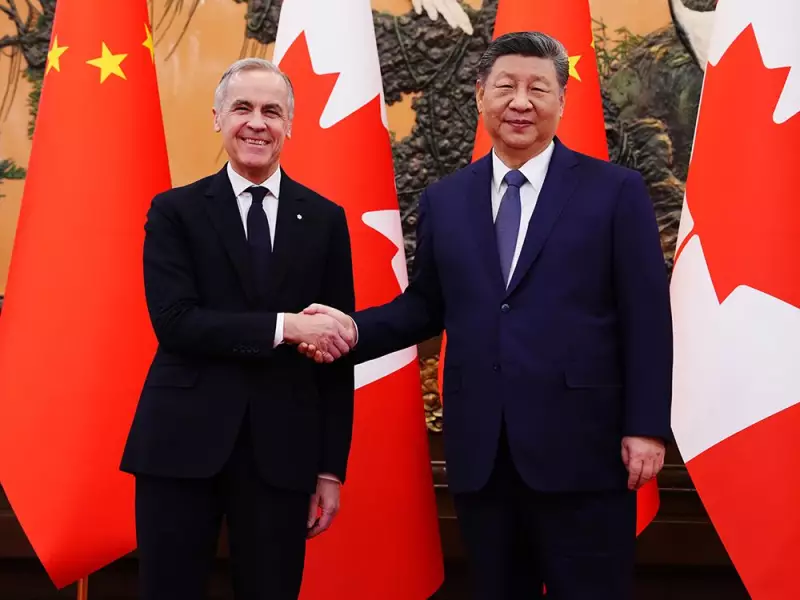
Following a recent tariff agreement between Canadian Prime Minister Mark Carney and Chinese President Xi Jinping, Taiwan's senior representative in Ottawa has issued a stark warning, arguing that China does not hold the key to solving Canada's economic challenges.
A Caution Against Economic Dependency
In an interview, Harry Ho-jen Tseng, Taiwan's top diplomat in Canada, stated bluntly that if Carney's trip to Beijing was "genuinely looking for an economic remedy for Canada," the answer cannot be found in China. He suggested the journey might instead be an attempt to create political leverage, either domestically or on the world stage.
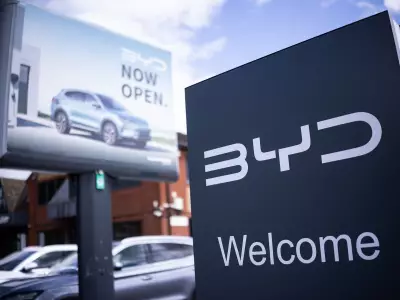
The comments come just days after Carney and Xi reached a deal to lower trade barriers, marking a significant reset in relations after years of strain. The agreement, finalized on January 16, 2026, will see Canada open its market to a limited number of Chinese electric vehicles at a reduced tariff. In return, China will lower import taxes on Canadian canola, a vital crop for Western Canadian farmers.

The Fundamental Barrier: A Non-Market Economy
Tseng, a former deputy foreign minister for Taiwan, elaborated on his skepticism by pointing to a core structural issue. He asserted that a comprehensive free trade deal is "unachievable between Canada and China, simply because China is not a market economy." He highlighted the numerous state-imposed restrictions within the Chinese market.
"The contraction or the expansion of their market is actually a result of political calculation," Tseng explained. He emphasized that purchases from Canada are often made by state-owned enterprises, not individual consumers. This dynamic, he warned, means "the state can stop buying at any time," making China an unreliable and politically driven trading partner.
Officials from the Chinese embassy in Ottawa did not respond to a request for comment on these statements.
Navigating a Delicate Diplomatic Position
Tseng serves in a role equivalent to an ambassador, though Taiwan lacks formal diplomatic recognition from Canada. Ottawa, like many Western nations, follows a policy of neither challenging nor endorsing China's claim over the self-governed island democracy.
Despite this, trade ties are substantial. In 2024, Taiwan was Canada's 15th-largest merchandise trading partner, with $6 billion (US$4.3 billion) in goods exchanged. Services trade added another $1.9 billion.
The warning from Taipei contrasts with the recent diplomatic thaw between Ottawa and Beijing, which was partly driven by Canada's need to diversify its export markets away from the United States following high tariffs imposed by former U.S. President Donald Trump.
Tseng endorsed Canada's official Indo-Pacific Strategy, published in late 2022 under former Prime Minister Justin Trudeau, which labeled China "an increasingly disruptive global power." He called the document a "very good road map."
However, the current government's stance may be shifting. When asked if Canada still stood by that description of China, Foreign Minister Anita Anand noted on Wednesday that this is "a new government with a new prime minister, a new foreign policy and a new geopolitical environment." This suggests the 2022 strategy may be under review as Carney's government seeks to redefine its relationship with the world's second-largest economy.