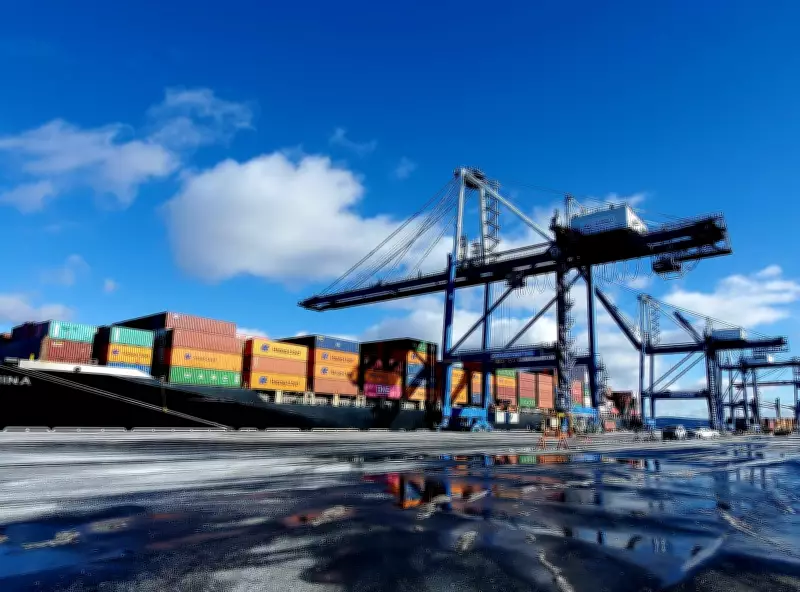
Port of Saint John Experiences Unprecedented Growth as Ontario Exporters Reroute Cargo
The Port of Saint John in New Brunswick is undergoing a remarkable transformation, with container traffic surging by an astonishing 153 percent over the past year. This dramatic increase is primarily driven by Ontario-based manufacturers who are actively reshaping their supply chains to circumvent tariffs imposed by the United States. By utilizing Saint John as an eastern gateway, these exporters have discovered a faster and more reliable alternative to traditional routes through American ports.
Modernization Efforts Fuel Expansion
Since DP World PLC assumed control as the container terminal operator in 2017, the port has undergone significant modernization. The introduction of post-Panamax cranes, enhanced operational expertise, and strengthened relationships with global shipping lines have collectively propelled the port's growth. These improvements have made Saint John an increasingly attractive option for shippers seeking efficient and dependable logistics solutions.
Shipments from Ontario now represent nearly one-third of the port's total exports. In 2025 alone, 8,083 twenty-foot-equivalent unit (TEU) containers departed from Saint John, more than doubling the previous year's figures. Europe received approximately half of these containers, with the remainder distributed across Asia, the Caribbean, and other regions of the Americas.

Economic Impact and Cargo Composition
The cargo flowing through Saint John is vital to Ontario's economy, comprising over 4,000 containers of automobiles, metals, and forestry products. These shipments, valued at an estimated $2 billion to $3 billion, are transported directly to European markets without passing through the United States. This direct routing allows exporters to avoid U.S. tariffs, which have prompted a strategic shift in trade patterns.
Craig Bell Estabrooks, Chief Executive of the Port of Saint John, emphasized the significance of this transition. "It doesn't take much moving from north-south to east-west to be a massive change for the supply chain," he noted. While tariffs and global disruptions have influenced shippers' decisions, Estabrooks attributes the port's appeal to its modern infrastructure, reliability, and dual railway options provided by Canadian Pacific Kansas City Ltd. (CPKC) and Canadian National Railway Co. (CN).
Strategic Advantages and Market Diversification
Barry Prentice, a professor of supply chain management at the University of Manitoba, highlighted several key factors driving Ontario shippers toward Saint John. The port's proximity by rail compared to Halifax and its capacity to accommodate larger container ships than Montreal offer distinct logistical benefits. "The competition of the two rail alternatives can only benefit Ontario shippers," Prentice remarked.
Recent global disruptions, including delays at the Suez Canal and conflicts in the Middle East, have further underscored the importance of having alternative shipping routes. For markets in Western India and other regions of the Indian Ocean, Saint John provides a shorter and more flexible pathway compared to other Canadian gateways.
Prentice also pointed out that while Saint John's growth represents a positive step toward market diversification and enhanced supply chain resilience, ports alone do not generate trade. Instead, they facilitate and optimize existing commercial flows, responding to evolving economic and geopolitical conditions.
The ongoing boom at the Port of Saint John reflects a broader realignment of Canada's trade routes, as exporters increasingly seek to mitigate risks associated with U.S. tariffs and global shipping uncertainties. With continued investment in infrastructure and strategic positioning, Saint John is poised to remain a critical hub in Canada's international trade network.