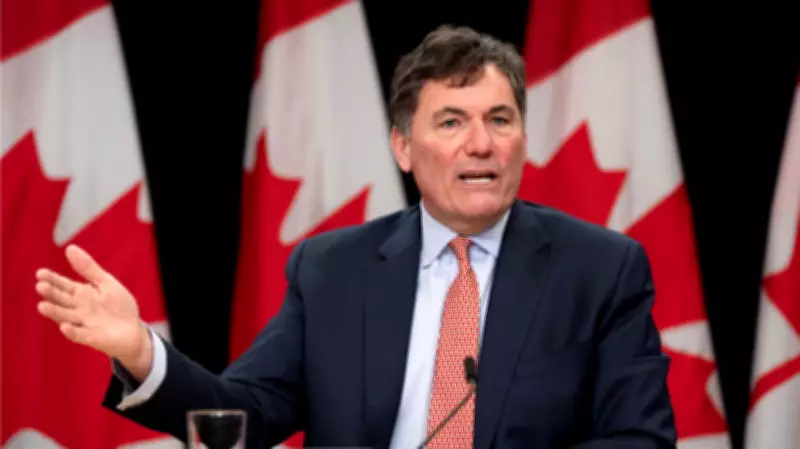
LeBlanc Accuses U.S. of Weaponizing Trade Dependency, Urges CUSMA Preservation
In a pointed critique ahead of critical trade talks, Canadian Trade Minister Dominic LeBlanc has accused the United States of weaponizing economic dependencies, while affirming the federal government's determination to keep the Canada-United States-Mexico Agreement (CUSMA) intact. Speaking on April 21, 2026, LeBlanc highlighted the strategic challenges posed by the Trump administration's approach, framing it as an attempt to leverage Canada's reliance on cross-border commerce for political gain.
Weaponization of Economic Ties
LeBlanc asserted that the U.S. is exploiting Canada's trade dependency, a move he described as undermining the cooperative spirit essential for North American prosperity. "We are witnessing a deliberate effort to turn our interconnected economies into a tool for pressure," he stated, emphasizing that such tactics risk destabilizing long-standing bilateral relations. This accusation comes as both nations prepare for negotiations that could reshape key aspects of CUSMA, originally implemented in 2020 to replace NAFTA.
Federal Commitment to CUSMA
Despite these tensions, LeBlanc made it clear that the Canadian government views CUSMA as a cornerstone of economic stability and growth. "Our priority is to safeguard this agreement, ensuring it remains a robust framework for fair trade and mutual benefit," he explained. He noted that any attempts to weaken or alter the pact could have far-reaching consequences for industries ranging from agriculture to manufacturing, potentially impacting jobs and investment across the country.

Broader Implications for Trade Policy
The minister's comments reflect broader concerns about the evolving dynamics of international trade, where dependencies are increasingly politicized. LeBlanc called for a return to principles of reciprocity and trust, warning that weaponizing trade could set a dangerous precedent globally. As talks progress, observers are closely monitoring how Canada navigates these challenges while advocating for its economic interests.
In summary, LeBlanc's remarks underscore a pivotal moment in U.S.-Canada relations, with CUSMA's future hanging in the balance. The federal stance aims to counter perceived U.S. aggression by reinforcing the agreement's integrity, highlighting the delicate balance between dependency and sovereignty in modern trade diplomacy.