

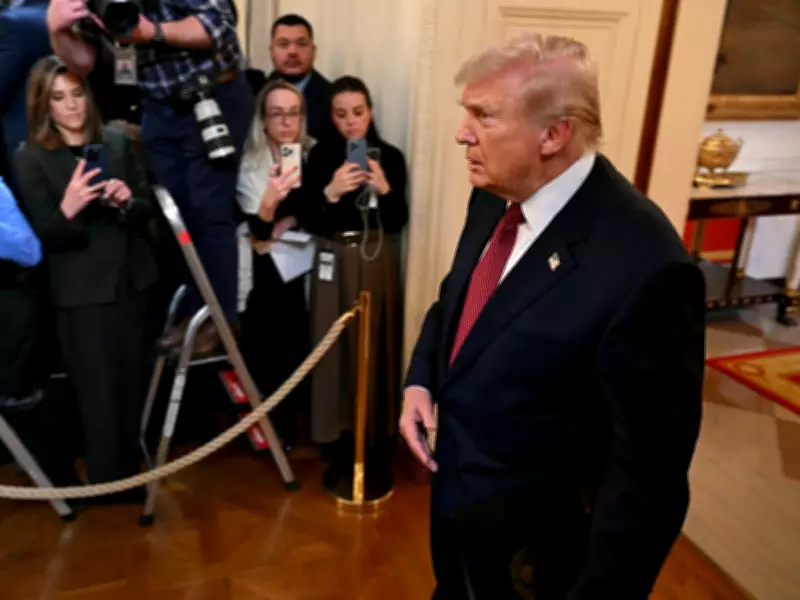
The Republican-controlled U.S. House of Representatives has joined the Senate in passing legislation aimed at terminating President Donald Trump's tariffs on Canada, signaling mounting concerns over the White House's economic agenda as midterm elections approach with a strong focus on affordability issues. However, Trump has repeatedly threatened to veto such measures, making it improbable that the legislation will become law.
Growing Republican Defections Undermine Trump's House Majority
The vote saw defections from six Republicans, combined with opposition from nearly all Democrats, underscoring Trump's increasingly fragile grip on the narrow House majority. This development comes as Republicans struggle to maintain control of both the House and Senate in November, a challenge exacerbated by the president's declining approval ratings on the economy and immigration.
Trump's Retaliation Threats and Political Consequences
As votes were being cast, Trump made it explicitly clear that there would be severe political repercussions for any Republicans who opposed him on tariffs. In a social media post, he warned, "Any Republican, in the House or the Senate, that votes against TARIFFS will seriously suffer the consequences come Election time, and that includes Primaries!" He added, "TARIFFS have given us Economic and National Security, and no Republican should be responsible for destroying this privilege."

House Speaker's Blockade Ends Amid Supreme Court Uncertainty
The fact that the vote occurred at all represented a significant setback for House Speaker Mike Johnson, a key Trump ally who had led efforts to block tariff-related bills from reaching the floor for months. This blockade ended on Tuesday when three Republicans joined Democrats in rejecting another extension of the prohibition.
Johnson had argued that the chamber should maintain the ban until the Supreme Court issues a ruling on the legality of Trump's global tariffs, with an opinion potentially released as early as February 20. The Republican-controlled Senate has also voted to abandon Trump's tariffs on Brazil and emergency global duties, in addition to the Canada tariffs.
Legislative Limitations and Midterm Election Pressures
Since joint resolutions require the president's signature to become law or must be passed with overwhelming majorities to override a veto, it is unlikely that lawmakers can compel Trump to abandon his signature economic policy through legislation alone. Instead, these votes reflect escalating political pressure to change course just months before the midterm elections, forcing swing-district Republicans affected by the tariffs to consider when or if to defy the president by voting against his agenda.
Broader Political Context and Democratic Gains
The measure's passage coincides with Trump privately contemplating withdrawing from the Canada-U.S.-Mexico trade pact he signed during his first term, a move that would intensify trade tensions in North America. Approximately 80% of goods imported from Canada meet CUSMA criteria and are exempt from tariffs.
Democrats have exceeded expectations in a series of recent elections, including the Miami mayoral race and the gubernatorial contests in New Jersey and Virginia. In recent weeks, a traditionally solid Republican Texas state Senate seat flipped to Democratic control in a dramatic 31-point swing toward Democrats, further highlighting the shifting political landscape.
Ultimately, while the legislative effort to end tariffs faces a likely presidential veto, the bipartisan support and Republican defections reveal deepening divisions within the GOP and growing anxiety over Trump's economic policies as voters prioritize affordability in the upcoming elections.






