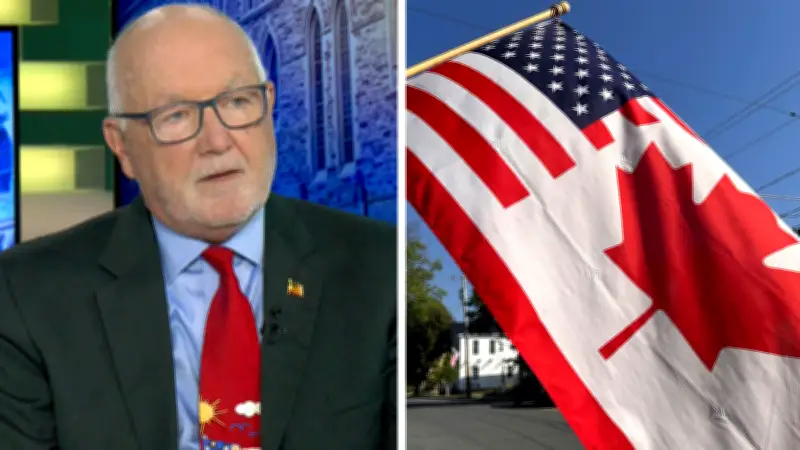
U.S. Ambassador to Canada Pete Hoekstra said on Tuesday that the two countries are “not anywhere near” reaching a deal on the renegotiation of the Canada-United States-Mexico Agreement (CUSMA) ahead of the July 1 deadline. Speaking to reporters in Ottawa, Hoekstra emphasized that significant gaps remain on key issues, including automotive rules of origin, digital trade, and agricultural market access.
Negotiations stalled on multiple fronts
Hoekstra stated that while both sides have made some progress in technical discussions, the political-level talks have not resolved the most contentious points. “We are not anywhere near a deal. There is still a lot of work to do,” he said. The ambassador pointed to disagreements over the threshold for regional value content in automobiles and the treatment of data localization as major sticking points.
According to sources familiar with the talks, Canadian negotiators have been pushing for more flexible rules that would allow a higher percentage of non-North American components in vehicles, while the U.S. insists on stricter requirements to boost domestic manufacturing. The digital trade chapter has also proven difficult, with Canada seeking to protect its cultural exemptions and privacy standards.

Deadline looms with no extension in sight
The July 1 deadline is the date by which the three countries must complete the first review of the agreement, as mandated by the original CUSMA text. If no deal is reached, the agreement could remain in force, but the review process would be considered failed, potentially triggering renegotiation or dispute resolution mechanisms.
Hoekstra did not rule out the possibility of a short extension but said that “no one is talking about that right now.” He added that the U.S. administration is focused on reaching a deal that benefits American workers and businesses. “We want a fair deal, not just any deal,” he said.
Impact on trade and economy
The uncertainty surrounding the renegotiation has already begun to affect cross-border trade. Business groups in both countries have urged negotiators to reach an agreement quickly to avoid disruption. According to the Canadian Chamber of Commerce, trade between Canada and the U.S. supports approximately 2.1 million jobs in Canada alone.
“Failure to reach a deal would send a negative signal to investors and could lead to increased tariffs or non-tariff barriers,” said a spokesperson for the Canadian Manufacturers & Exporters association. “We need certainty to keep supply chains stable.”
Hoekstra acknowledged the economic stakes but emphasized that the U.S. is prepared to walk away if necessary. “We are not going to sign a bad deal,” he said. “The president has been clear on that.”
Next steps
Canadian Deputy Prime Minister and Minister of Finance Chrystia Freeland is expected to meet with U.S. Trade Representative Jamieson Greer later this week in Washington to try to narrow differences. Mexican officials have also been involved in the talks, though Mexico has taken a less prominent role in the current phase.
Hoekstra expressed cautious optimism that a deal could still be reached, but only if both sides show flexibility. “We have a week left. Anything is possible, but it will require serious compromise,” he said. “Right now, we are not there.”