Ontario Premier Doug Ford has launched a sharp critique against the federal government's newly announced trade agreement with China concerning electric vehicles (EVs). Ford revealed that both his office and major Canadian automakers were given mere hours of notice before the deal was made public.
A Partnership Questioned
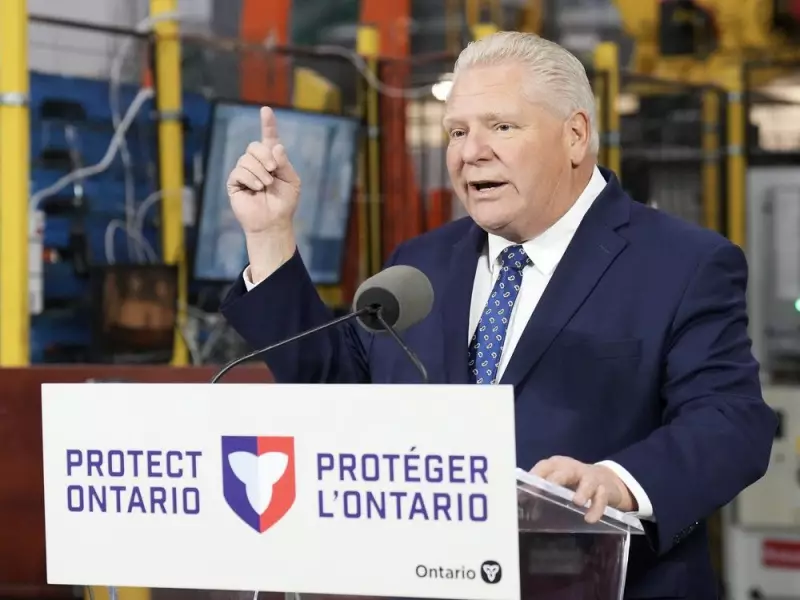
Speaking at the Rural Ontario Municipal Association's annual meeting in Toronto on Monday, Ford expressed his frustration with the lack of consultation. "I found out about this deal, and the auto companies found out, by the way, a few hours before it was announced, so much for the partnership," he stated. The premier emphasized that effective governance relies on communication and collaboration, elements he found lacking in this process.
The agreement, announced by Prime Minister Mark Carney on Friday, January 19, 2026, is described as a landmark. It involves China reducing tariffs on Canadian canola exports. In return, Canada will allow the import of 49,000 Chinese-made electric vehicles at a reduced tariff rate of 6.1 percent.

Economic Concerns for Canadian Auto Workers
Ford's primary objection centers on the potential impact on the Canadian automotive workforce. He argued that the deal forces Canadian auto industry employees to compete directly with Chinese workers who earn significantly lower wages. "I will never apologize for standing up for our auto workers," Ford declared, vowing to protect their jobs and paycheques.
The federal government has defended the agreement, suggesting it will spur Chinese joint investment in Canada and provide more affordable EV options for consumers. Officials project that about half of the imported vehicles will have a price tag below $35,000.
Ford's Demands for Federal Support
Asserting that it is time for Ottawa to "step up," the Ontario premier laid out a series of demands aimed at bolstering the domestic auto sector. His list includes:
- The removal of the federal EV sales mandate.
- Harmonizing regulations with key trading partners.
- Scrapping fees deemed unnecessary that deter investment.
Ford confirmed he has not yet spoken directly with Prime Minister Carney since the deal's announcement, having been informed instead by Intergovernmental Affairs Minister Dominic LeBlanc.
The Canadian auto industry is a major economic pillar, supporting over 130,000 direct jobs and approximately 500,000 direct and indirect positions nationwide, according to the Canadian Vehicle Manufacturers' Association. The sector faces concurrent challenges from the United States, where President Donald Trump recently commented, "we don't need cars made in Canada," during a visit to a Michigan Ford plant. U.S. tariffs on Canadian autos remain, with limited exemptions under the Canada-United-States-Mexico Agreement (CUSMA).