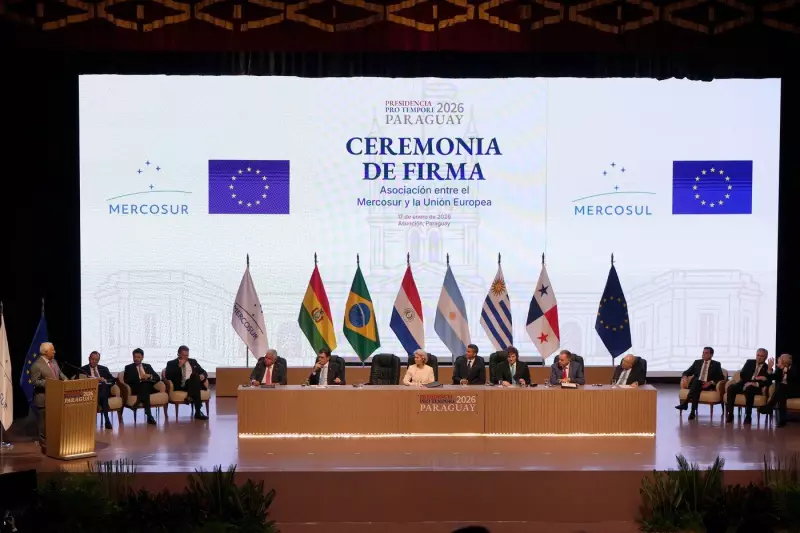
In a significant move for global commerce, the European Union and the South American Mercosur trade bloc have officially signed a landmark free trade agreement. The signing ceremony took place in Asunción, Paraguay, on Saturday, January 17, 2026.
A Historic Deal for Two Major Economic Blocs
The agreement marks the culmination of years of complex negotiations between the EU and Mercosur, which includes member nations Argentina, Brazil, Paraguay, and Uruguay. This pact is poised to create one of the world's largest free trade zones, linking over 700 million consumers and reshaping supply chains across the Atlantic.
While the core announcement focuses on the deal between the two blocs, the context of global trade is ever-present. The news comes alongside other significant trade developments, such as Saskatchewan Premier Scott Moe and Canadian canola farmers celebrating a separate, favorable trade deal with China. This highlights the competitive and interconnected nature of international markets, where major economies are actively securing strategic partnerships.

Details and Implications of the Agreement
The deal, described as "landmark" by officials, is expected to drastically reduce or eliminate tariffs on a vast array of goods and services traded between the regions. Key sectors likely to be impacted include agriculture, automotive, and manufactured goods. For the EU, it promises greater access to Mercosur's agricultural markets, while South American producers gain improved entry to the vast European consumer base.
The signing event was captured in a photograph by Jorge Saenz, documenting the moment in the Paraguayan capital. The timing of this agreement is notable, as it underscores a continued push for economic integration despite global geopolitical uncertainties and a shifting landscape for international trade rules.
Broader Context and Global Trade Landscape
This development does not occur in a vacuum. The same day's news cycle included reports of Canada informing the United States of its plan to drop Chinese EV tariffs, and former Bank of Canada governor Mark Carney engaging in talks to diversify trade, including with nations like Qatar. These parallel stories illustrate the multifaceted and sometimes competing strategies nations employ to secure economic prosperity.
For Canadian observers, particularly in business and policy circles, the EU-Mercosur deal serves as a powerful reminder of the accelerating pace of global trade realignment. It emphasizes the importance for Canada to actively pursue and modernize its own trade relationships to remain competitive in key export sectors.
The full text and specific clauses of the agreement are expected to be released in the coming weeks, allowing businesses and analysts to fully assess the opportunities and challenges presented by this new economic framework between Europe and South America.