Carney's International Trade Agenda Meets Domestic Realities
Prime Minister Mark Carney has concluded his diplomatic visit to India and proceeded to Australia, where he is actively promoting an ambitious initiative to merge the Trans-Pacific Partnership bloc with the European Union. This globe-trotting effort aims to position Canada as a key player on the world stage, seeking new economic alliances amid shifting global dynamics.
Photo-Ops Versus Practical Outcomes
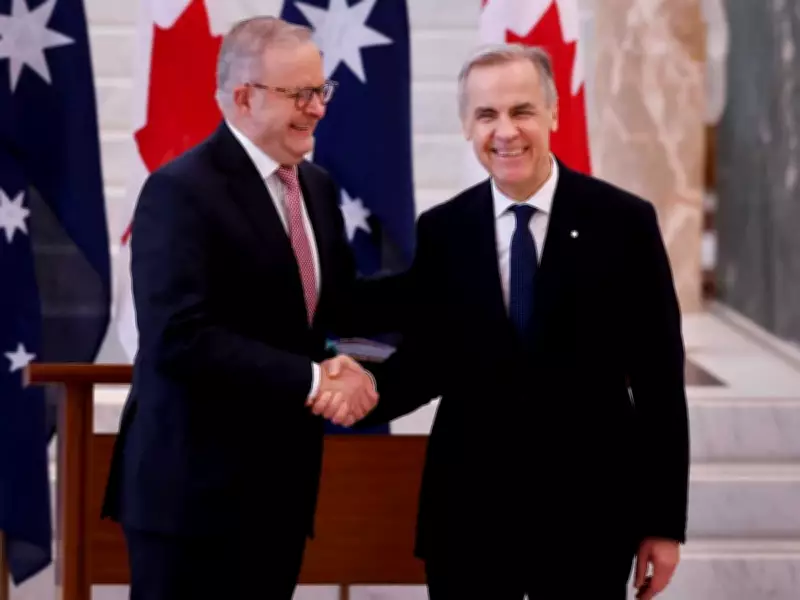
While Carney's international travels generate positive media coverage and ceremonial handshakes—such as his recent meeting with Australian Prime Minister Anthony Albanese in Canberra—the tangible benefits of these engagements remain limited. The bilateral merchandise trade between Canada and Australia totaled approximately $6.1 billion for the entire year of 2024, according to Global Affairs Canada. In stark contrast, daily trade across the U.S.-Canada border amounts to $3.6 billion, underscoring the overwhelming importance of the American market to Canadian prosperity.
The Persistent Shadow of U.S. Relations
Despite Carney's efforts to cultivate alternative partnerships, the United States continues to dominate Canada's trade landscape. The upcoming renegotiation of the Canada-U.S.-Mexico Agreement (CUSMA) presents a critical juncture for the nation's economic future. Canada has already taken steps to address U.S. concerns by rescinding the digital services tax, which former President Donald Trump identified as a major obstacle to reaching a new agreement.

Supply Management: A Stumbling Block
Another significant point of contention is Canada's supply management system for dairy products, which has drawn criticism not only from the United States but also from other trading partners. In 2024, the United Kingdom abandoned trade talks with Canada partly due to frustrations over limited access to the protected dairy market, particularly for cheese exports. This protectionist policy continues to hinder broader trade negotiations and international cooperation.
Expert Recommendations for Reform
Dalhousie University professor Sylvain Charlebois, writing in the Toronto Sun, argues that eliminating supply management outright would be politically disastrous for Carney's administration. Instead, he proposes a gradual transition supported by federal funds to buy out producers unwilling to compete in a more open market. Charlebois advocates for consolidation around farms that demonstrate readiness to modernize, innovate, and scale operations, framing this approach as genuine structural reform rather than temporary political solutions.
As Carney navigates these complex trade landscapes, the balance between international diplomacy and domestic economic priorities remains delicate. While photo opportunities with global leaders may enhance Canada's profile, the fundamental realities of cross-border trade and internal policy challenges demand focused attention and strategic action to secure long-term prosperity.