

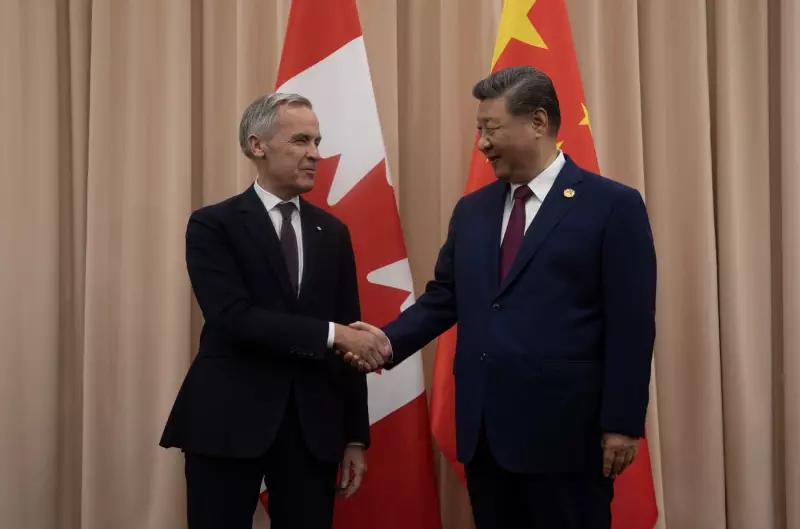
Former Bank of Canada governor and special advisor Mark Carney held a significant meeting with Chinese President Xi Jinping in Beijing on Thursday, January 15, 2026. The high-level diplomatic engagement coincided with the release of a new bilateral plan for energy cooperation between the two nations.
A Pivotal Meeting Amidst Broader Dialogue
The encounter between Carney and President Xi represents a notable moment in ongoing Canada-China relations. While the precise agenda of their private discussions was not fully disclosed, the timing aligns with the publication of a formal framework aimed at collaborative efforts in the energy sector. This suggests the talks likely encompassed economic, environmental, and trade priorities linking North America and Asia.
Diamond Isinger, a former special advisor on U.S.-Canada relations, provided early commentary on the developments. Isinger noted that it remains premature to draw definitive conclusions about Canada's strategic positioning resulting from Carney's trip. "It’s still too early in Carney’s trip to China to know where Canada stands," Isinger stated, highlighting the complex and evolving nature of the dialogue.

The Energy Cooperation Framework
Parallel to the diplomatic meeting, officials from Canada and China confirmed a joint plan to advance cooperation in energy-related fields. While specific projects and financial commitments were not immediately detailed, such frameworks typically pave the way for collaboration in areas like clean technology, sustainable resource development, and renewable energy infrastructure.
This initiative signals a mutual interest in addressing global energy demands and climate objectives through partnership. For Canada, a major energy exporter, engaging with one of the world's largest energy consumers opens potential avenues for investment and knowledge exchange.
Analysis and Forward-Looking Implications
Carney's role in this dialogue is closely watched, given his extensive background in global finance and central banking. His engagement carries weight beyond formal government channels, often seen as a bridge for economic diplomacy. The outcomes of this trip and the newly minted energy plan will be scrutinized for their impact on Canada's trade diversification goals and its approach to balancing economic interests with geopolitical considerations.
Observers will monitor subsequent announcements for concrete agreements. The early assessment from experts like Isinger underscores a cautious approach, awaiting further actions and statements to fully gauge the trip's success and long-term direction for bilateral relations.
This development occurs amidst a broader international context where nations are recalibrating economic partnerships and energy security strategies. Canada's continued dialogue with China, through figures like Carney, remains a significant element of its foreign policy and economic planning.






