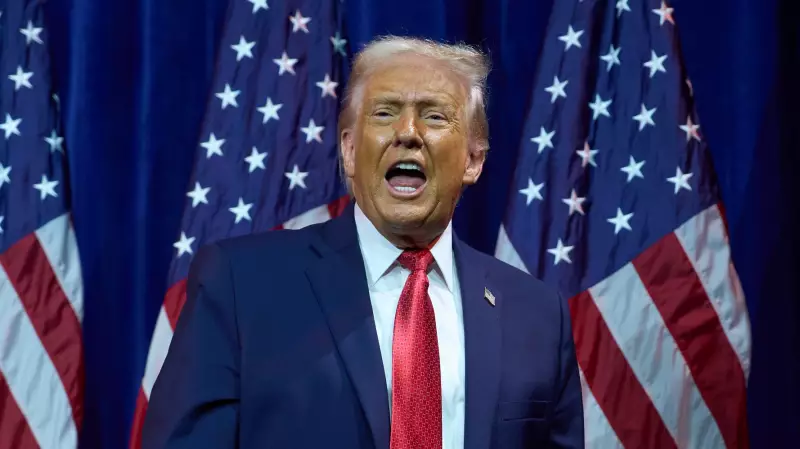
In a move that has reignited a long-standing debate over consumer debt, former U.S. President Donald Trump has publicly called for a significant cap on credit card interest rates. The announcement, made on his social media platform Truth Social, proposes a one-year limit of 10%, but leaves critical questions about implementation unanswered.
The Announcement and Immediate Reaction
On January 10, 2026, Trump declared his intention to cap credit card interest rates at 10% for one year, effective from January 20, 2026. He framed the pledge as a protective measure for the American public, stating, "Please be informed that we will no longer let the American Public be ‘ripped off’ by Credit Card Companies." The announcement was a reiteration of a campaign promise made during his successful 2024 election bid.
The White House, representing the current administration, offered a brief acknowledgment on social media but did not provide details or an immediate substantive comment on Trump's call. Similarly, major U.S. financial institutions, including American Express, Capital One, JPMorgan, Citigroup, and Bank of America, remained silent in the immediate aftermath, not responding to requests for comment.

Bipartisan Legislative Context
Trump's proposal does not exist in a vacuum. Lawmakers from both major parties have expressed concern over high consumer borrowing costs. This has led to concrete, though stalled, legislative efforts in Congress.
Notably, a bipartisan bill introduced by Senator Bernie Sanders, an independent who caucuses with Democrats, and Republican Senator Josh Hawley, aims to cap credit card interest rates at 10% for a five-year period. Their legislation explicitly directs credit card companies to comply as part of a broader consumer relief package.
In the House of Representatives, a similar cross-aisle effort is underway. Democratic Representative Alexandria Ocasio-Cortez and Republican Congresswoman Anna Paulina Luna have co-sponsored a bill to implement the same 10% cap, highlighting the rare issue that garners support from both sides of the political divide.
Contrast with Recent Regulatory Actions
The call for a rate cap stands in stark contrast to a recent regulatory action undertaken by the Trump administration. Last year, the administration moved to scrap a rule from the Biden era that capped credit card late fees at $8. The administration sided with business and banking groups who argued the rule was illegal, and a federal judge subsequently threw it out.
This history has led to criticism from opposition lawmakers, who have pointed out that Trump has yet to deliver on his earlier campaign pledge regarding interest rates. The lack of details in his latest announcement—specifically on how the cap would be enforced or how companies would be compelled to comply—has further fueled skepticism about the proposal's feasibility.
What Happens Next?
The path forward for any national interest rate cap remains highly uncertain. While the bipartisan Senate and House bills provide a legislative framework, they have not yet become law. Trump's social media declaration, while significant in shaping public discourse, lacks the detail of formal policy. The financial industry's reaction, once it materializes, is expected to be strongly opposed, citing risks to credit availability and economic function.
For now, the proposal has successfully placed the issue of high-cost consumer credit back in the national spotlight, setting the stage for a continued debate that pits consumer protection advocates against the powerful banking sector.