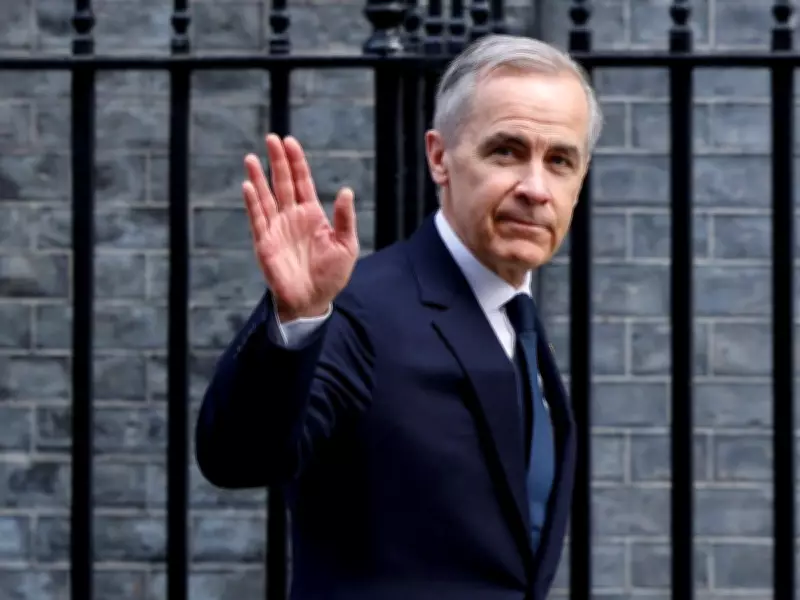
In a climate where unpredictability in trade is often attributed to the United States, a deeper examination reveals that Canada's own policy direction under Prime Minister Mark Carney has become increasingly difficult to decipher. While Donald Trump's volatility has long been a focal point, Ottawa's shifting stance poses significant risks, particularly for the agri-food sector that depends heavily on cross-border commerce.
Inconsistent Messaging Creates Uncertainty
Under Carney's leadership, Canada's posture toward the United States has evolved with surprising rapidity. In April 2025, promises of a renewed economic and security partnership were made. By summer, officials declared the existing agreement as the optimal outcome. Fast forward to April 2026, and suddenly reliance on the U.S. is framed as a strategic vulnerability. This inconsistency occurs despite months without substantive engagement or negotiation, leaving industry stakeholders questioning the government's actual plan.
This messaging carries substantial weight, especially when delivered in high-profile addresses that suggest the Canada-United States-Mexico Agreement (CUSMA)—the cornerstone of North American trade—might be on life support. For an agri-food sector that exports approximately 75% of its products to the United States, such ambiguity is not merely an academic concern but a tangible business risk.

Advisory Council Lacks Critical Voices
The revival of a Trudeau-era advisory council might indicate renewed seriousness, and its composition includes figures with relevant expertise. Ken Seitz and Michael Harvey bring knowledge in fertilizers and agricultural trade, while Jean Simard understands packaging and processing supply chains. Jonathan Price connects to resource extraction for fertilizer inputs, and P. J. Akeeagok offers insights into remote food security.
However, this group represents an indirect approach to agri-food knowledge. Notably absent are primary producers—farmers and Western Canadian voices operating at the front lines of production. In a sector characterized by geographic vastness and structural complexity, this omission is strategic and significant, highlighting a broader lack of coherent strategy in Canada's trade approach.
Mexico's Strategic Discipline Contrasts Sharply
While Canada debates its posture, Mexico under socialist leader Claudia Sheinbaum has demonstrated remarkable strategic discipline. Despite provocations—including being labeled a "narco-president" and disputes over symbolic issues like the renaming of the Gulf of Mexico—Mexico has largely refused to escalate. Instead, it has remained focused on trade, production, and integration within the North American economy.
This approach has yielded tangible benefits. Mexico has strengthened its position as the United States' most reliable agricultural and manufacturing partner, positioning itself as America's fresh food basket and a seamless extension of U.S. logistics and supply chains. The U.S.-Mexico relationship, while not without friction, is fundamentally aligned, with disputes occurring within the partnership rather than about its existence.
Canada Risks Diminishing Influence
In contrast, Canada risks drifting into a narrower role as a bulk commodity supplier with diminishing influence over consumer-facing markets. The direction of travel for Mexico is clear and integrated, while Canada's remains ambiguous. This contrast is striking and problematic for Canadian prosperity.
Trade relationships typically erode gradually through hesitation, mixed messaging, and missed opportunities rather than collapsing overnight. What is occurring now appears to be a slow decoupling of strategic intent, which Canada can ill afford given its economic dependence on cross-border trade, particularly in food.
Increasingly, companies are not waiting for clarity from Ottawa. They are hiring consultants, restructuring supply chains, and preparing for a potential post-CUSMA environment—not because it is inevitable, but because it has become conceivable. This proactive adaptation by the private sector should raise alarms about the government's current trajectory.

Ultimately, markets reward certainty, and Canada is currently offering anything but. As Mexico solidifies its central role in continental trade, Canada must address its strategic ambiguity to avoid compromising the stability of its vital agri-food sector and broader economic interests.