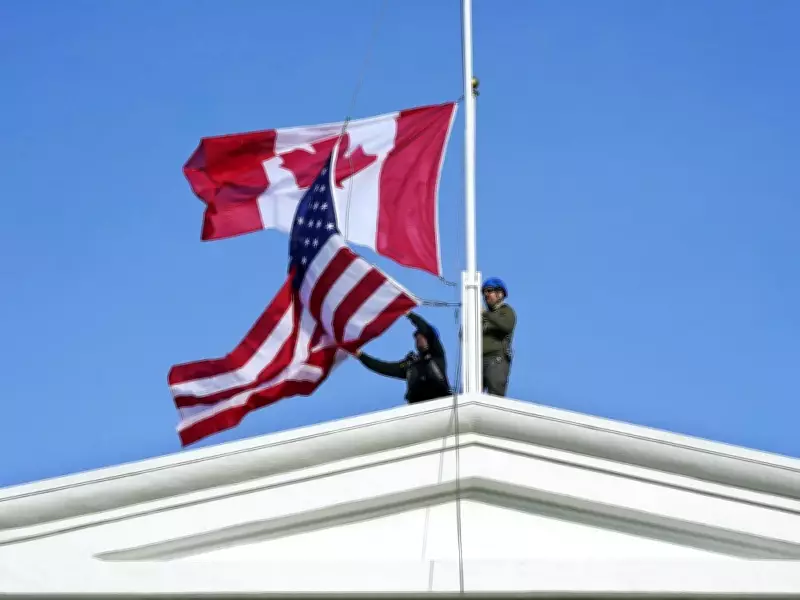
Canada Demands Trade Reciprocity After U.S. 'Pocketed' Concessions
Canada's newly appointed chief trade negotiator to the United States has issued a strong call for reciprocity in ongoing trade discussions, emphasizing that Washington has "pocketed" significant concessions made by Ottawa without offering comparable benefits in return. Janice Charette made these remarks in her first major public address since being appointed to the role by Prime Minister Mark Carney on February 16.
Concessions Made, Reciprocity Sought
Charette pointed to several substantial moves Canada has already implemented to address grievances raised during the Trump administration. These include the removal of a digital sales tax targeting U.S. technology giants, the withdrawal of numerous retaliatory tariffs imposed by former Prime Minister Justin Trudeau, and significant investments in border security enhancements.
"The Canadian government has made some very significant—I would describe them as concessions—moves already," Charette stated during a Canadian Chamber of Commerce summit in Ottawa. "So far it's being pocketed. And I think it will be important for us to see some mutuality in terms of the negotiating process."

Sectoral Tariffs as Priority Issue
For meaningful progress in the upcoming review of the Canada-U.S.-Mexico Agreement (CUSMA), Canadian officials insist that revisiting Trump-era sectoral tariffs must be addressed first. These tariffs specifically target crucial Canadian export sectors including steel, aluminum, and automotive products.
Minister for Canada-U.S. Trade Dominic LeBlanc emphasized this priority in an interview with the Canadian Broadcasting Corporation, stating: "Our ability to make significant progress on the sectoral tariffs is essential for us to get to a conversation around the CUSMA review process."
LeBlanc revealed that the two nations had been close to reaching an agreement on metals tariff relief last year, but negotiations were abruptly terminated by Trump in October. This decision came in retaliation for television advertisements run in the United States by Ontario province, which featured former President Ronald Reagan speaking against tariffs.
Strategic Approach to CUSMA Review
Charette cautioned Canadians against expecting all trade issues to be resolved by July 1, the scheduled date for countries to review CUSMA. She characterized this date as "a checkpoint—it's not a cliff," indicating that parties are pursuing comprehensive solutions rather than rushed agreements.
"We're in a negotiating process, so you're not going to hear a lot of public bouquets necessarily thrown our way," Charette noted. "Not all progress is going to be visible here."
Long-Term Implications
The outcome of these negotiations carries substantial long-term consequences. If the three countries agree to renew CUSMA, the accord would remain in force for another sixteen years. Failure to reach agreement could trigger annual reviews for a decade until the deal's expiration in 2036, with any country retaining the right to announce withdrawal with six months' notice.
Charette reported that stakeholders consulted by officials have described CUSMA as a "very good" deal requiring no fundamental changes or renegotiation. This contrasts with former President Trump's characterization of the agreement as "irrelevant" and his private musings about potentially quitting the pact, despite having signed it during his first term and initially hailing it as a "colossal victory."
LeBlanc expressed optimism that economic realities might eventually influence U.S. positions, stating: "We think the United States at one point will conclude that it puts inflationary pressure on a series of goods in the United States. But the United States has to come to that conclusion themselves. When they do, good news, we're ready with a series of very specific offers that we think will incentivize that movement."