

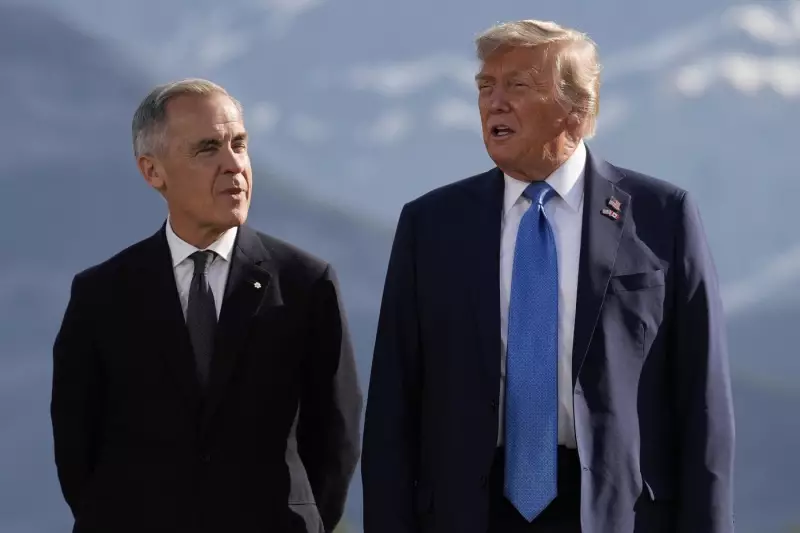
In a significant development for Canadian international trade, a major new agreement has been reached between Canada and China. The deal, negotiated under the leadership of Canadian official Mark Carney, focuses on key export sectors and has drawn a reaction from south of the border.
The Details of the Landmark Agreement
The core of the agreement centers on electric vehicles (EVs) and canola. It establishes a new framework involving tariffs and quotas, which is being described by officials as a landmark arrangement. The deal aims to provide more predictable and favorable access for Canadian exporters to the massive Chinese market. This is particularly crucial for Canada's agricultural sector, for which China is a vital destination for canola, and for the burgeoning electric vehicle industry seeking global reach.
The provincial government of Saskatchewan was quick to celebrate the news, issuing a statement characterizing the deal and its significantly reduced tariffs as "very good news" for the province and the country. The positive sentiment was echoed in Nova Scotia's lobster industry, which expressed surprise and elation over the related suspension of a Chinese tariff, highlighting the deal's potential wide-ranging impact across different Canadian industries and regions.

Political Reactions and Broader Context
The agreement comes at a time of renewed focus on Canada's relationship with China. The deal prompted commentary from former U.S. President Donald Trump. In remarks covered by Reuters, Trump stated regarding Carney, "If Carney can get a deal with China, he 'should do that.'" This observation was made as Trump characterized walking away from what he called tremendous opportunities, drawing a contrast in trade approaches.
CTV News U.S. political analyst Eric Ham provided analysis on the American reaction to Canada's renewed engagement with China, noting the geopolitical dimensions at play. Furthermore, Carney indicated that there is "much alignment" between Canada and China on the issue of Greenland sovereignty, suggesting the trade discussions may be part of broader diplomatic dialogues.
Implications for Canadian Trade and Economy
This agreement represents a concrete step in stabilizing and advancing a critical trade relationship for Canada. For farmers, especially in the Prairies, secure canola export channels are economically essential. For the automotive and technology sectors, establishing clear rules for electric vehicle trade is a forward-looking move that could spur investment and innovation.
The deal also demonstrates Canada's continued pursuit of its own trade priorities, even amidst the shifting dynamics of global politics and the policies of its largest trading partner, the United States. The positive provincial reactions from Saskatchewan and Nova Scotia underscore the national economic importance of diversified international trade agreements that support key industries from coast to coast.






