Trump's Iran Strike Escalates Global Oil Market Risks and Supply Threats
President Donald Trump's decision to launch a military strike against Iran has introduced significant new risks for a substantial portion of the world's oil supply, threatening to destabilize global energy markets and disrupt key shipping routes.
Strategic Importance of Iran and the Strait of Hormuz
The Islamic Republic of Iran itself produces over 3 million barrels of oil per day, accounting for approximately 3% of global output and ranking as the fourth-largest producer within OPEC. However, Iran's influence on worldwide energy supplies extends far beyond its own production due to its critical geographic position.
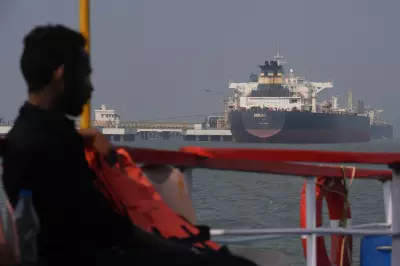
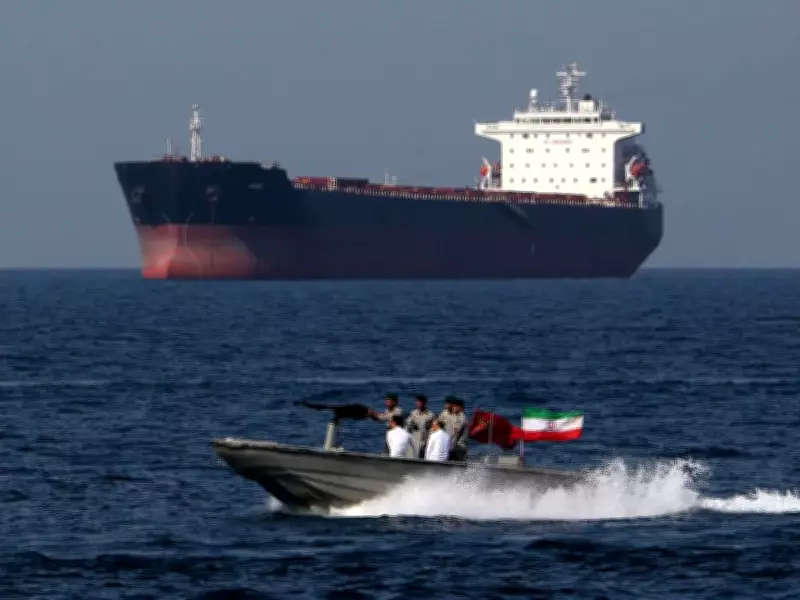
Iran borders the Strait of Hormuz, a vital shipping lane that facilitates the transport of about one-fifth of the world's crude oil from major suppliers such as Saudi Arabia and Iraq. Following recent regional attacks, traffic through this waterway has declined sharply, with only a few tankers continuing to navigate the strait, raising alarms about potential supply interruptions.

Regional Dangers and Market Nightmares
Iran has historically asserted its capability to fully close the Strait of Hormuz, a drastic measure never previously implemented that would represent a nightmare scenario for global markets. On Saturday, ships reported hearing a radio broadcast, allegedly from the Iranian navy, announcing a ban on transit through the strait. While Tehran has not issued a formal statement regarding the status of the waterway, the noticeable reduction in vessel movements underscores the heightened tensions.
The Strait of Hormuz serves as a crucial chokepoint for the majority of Persian Gulf exports, including crude oil and refined fuels like diesel and jet fuel. Additionally, Qatar, one of the world's leading liquefied natural gas exporters, depends on this route and has requested that vessel owners halt navigation in response to the escalating situation.
Alternative Routes and Limited Options
Some OPEC members possess limited abilities to reroute oil shipments via pipelines that bypass the Strait of Hormuz, though these alternatives are insufficient to fully mitigate the risks of a closure.
- Saudi Arabia can divert some crude using the East-West Pipeline, a 746-mile conduit that transports oil across the kingdom to a terminal on the Red Sea, with a capacity of 5 million barrels per day.
- The United Arab Emirates has the Habshan-Fujairah pipeline, which moves oil from its fields to a port along the Gulf of Oman, capable of handling 1.5 million barrels daily.
- Iraq, as OPEC's second-largest producer, relies heavily on sea shipments from the port of Basra that transit the strait, with only a northern pipeline to Turkey offering minimal relief.
- Kuwait, Qatar, and Bahrain have no alternative routes and must ship all their oil through the Strait of Hormuz, making them particularly vulnerable to disruptions.
Even with these pipeline options, a closure of the strait would cause massive export disruptions and drive crude prices sharply higher, highlighting the precarious balance in global energy security.