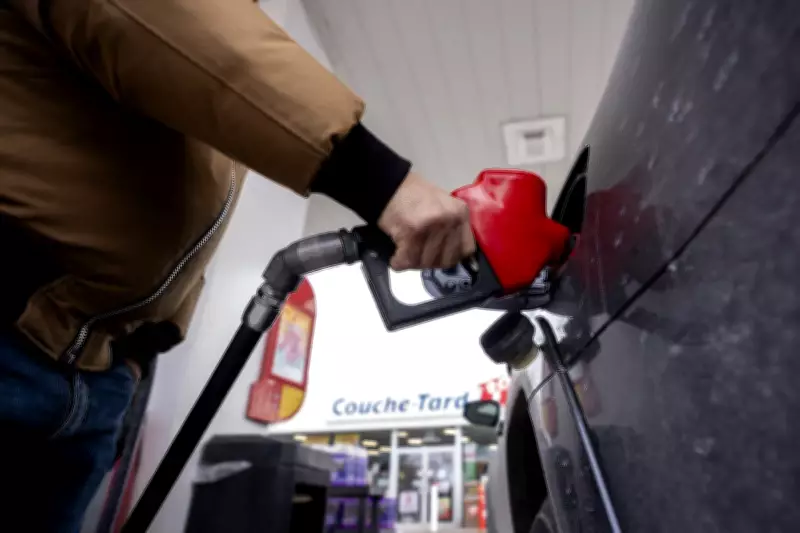
Summer Driving Season Collides with War-Driven Gas Price Surge in Canada
Canadian drivers are bracing for a challenging summer as the annual peak driving period converges with a significant surge in gasoline prices, largely driven by escalating global conflicts. The situation, highlighted by recent events in the Middle East, threatens to put substantial financial pressure on households nationwide.
Global Conflict Fuels Price Volatility
The ongoing war involving Iran has created widespread uncertainty in global energy markets, disrupting shipping routes and tightening oil supplies. This instability has directly translated into higher prices at Canadian pumps, with analysts noting that the conflict has exacerbated existing market tensions. Energy experts warn that these conditions are likely to persist throughout the summer months, creating a perfect storm for consumers.
Metro Vancouver has already experienced noticeable price spikes, with other major urban centers across Canada reporting similar upward trends. The timing couldn't be worse, as warmer weather typically encourages increased travel and recreational driving.

Economic Impact on Canadian Households
For the average Canadian family, the combination of seasonal travel plans and elevated fuel costs presents a significant budgeting challenge. Many households may need to reconsider their summer travel itineraries or seek alternative transportation options to manage the increased expenses. The situation is particularly concerning for those in regions with limited public transit infrastructure.
Businesses reliant on transportation are also feeling the pinch, with increased operational costs potentially translating into higher prices for goods and services throughout the economy.
Regional Variations and Government Responses
While all provinces are affected, regional differences in taxation and distribution systems mean some areas experience more dramatic price fluctuations than others. Provincial governments are monitoring the situation closely, with some considering policy adjustments to mitigate the impact on consumers.
In related developments, Ontario has proposed allowing solo drivers to use High Occupancy Vehicle (HOV) lanes under certain conditions, a measure that could help some commuters save time if not money. Meanwhile, Hydro-Québec customers recently received some relief when the energy board rejected a full rate hike request.
Long-Term Outlook and Consumer Adaptation
Market analysts suggest that without a resolution to the underlying geopolitical tensions, Canadian drivers should prepare for sustained elevated prices through the summer and potentially beyond. This reality is prompting many consumers to explore fuel-efficient vehicles, carpooling arrangements, and modified travel plans.
The convergence of the summer driving season with global conflict-driven price increases serves as a stark reminder of how international events can directly impact everyday Canadian life. As temperatures rise and travel plans take shape, the cost of mobility has become a central concern for households across the nation.