Even as Canada comes to terms with the fact that not everything we have been told about residential schools is true, some people want to criminalize asking questions about it. On Monday, the Senate's human rights committee voted for an amendment making it a criminal offence to engage in what they called "residential school denialism."
This follows a private member's bill brought about by New Democrat Leah Gazan that would also criminalize so-called denialism, a bill that several Liberal ministers have said they supported.
Now, the government's hate crime-focused Bill C-9 has been amended in the Senate to accomplish the same thing. The amendment, which still has to pass the full Senate and go back to the House, would make such an offence punishable by up to two years in jail.

The amendment says that it is an offence to promote hatred against Indigenous people "by condoning, denying or downplaying the Indian residential school system."
What does that really mean though?
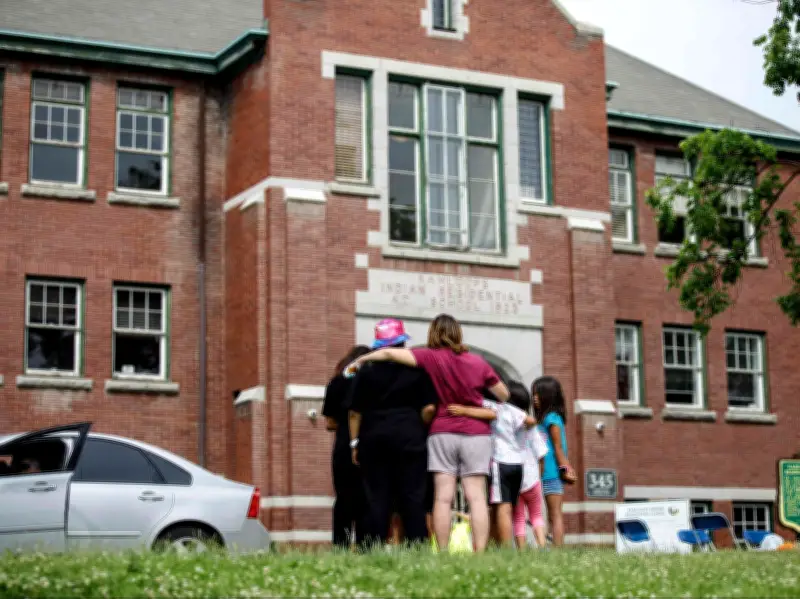
Would denying that there were 215 children buried at the Kamloops Indian Residential School in B.C. be an offence of denialism? Would denying that Indigenous children were murdered at these schools rather than mostly dying of what were common illnesses then be an indictable offence?
It was five years ago when the claim that 215 children were buried at the Kamloops school was made based on ground-penetrating radar finding anomalies in the ground. The presence of 215 bodies has never been proven and no remains have been exhumed to back up this assertion.
Did children die while attending residential schools across Canada? Absolutely, including in Kamloops. Does that mean that there are 215 secret burials on the ground of the Kamloops school or that there are mass graves there and at other schools, as many in the media have claimed since then? No, not at all.
Yet it was this claim of 215 children in unmarked graves, buried secretly, that gave rise to the call for legislation criminalizing denialism. There have been calls for several years now to criminalize the essence of the work performed by my Postmedia colleague Terry Glavin, who has for four years been pointing to the problem with the story surrounding Kamloops.
Tough questions need to be asked
Since May 2022, the one-year anniversary after the Kamloops story broke, Glavin has asked tough questions, pointed to holes in the official narrative and called out other media for refusing to even question that narrative. Last week, the National Post published his latest piece on this issue titled, "The Kamloops 'graves' and the poisoned chalice of 'reconciliation.'"
Last week, on the five-year anniversary, The Globe and Mail published an editorial titled, "There is no reconciliation without truth." They admitted to not doing enough to question the narrative at the time and they called on former prime minister Justin Trudeau to set the record straight after the hyperbole he engaged in starting in the summer of 2021.
If you recall, the flag on Parliament Hill was put at half-mast for six months; politicians went out of their way to outdo each other in their rhetoric or their performative actions.
Five years later, we still have no evidence of what the band now calls "potential burials" at the Kamloops school, but we have senators and elected officials looking to criminalize those who deny there are the bodies of 215 children buried there.
The Senate is often referred to as the chamber of sober second thought. Let's hope that when this amendment gets to the full Senate, it is defeated.