An abandoned factory in Welland, Ontario, sat unused for years until a real estate developer realized its hidden treasure: a landfill full of synthetic graphite worth billions of dollars. Steve Charest, who specializes in buying and redeveloping old industrial sites, purchased the property expecting to build homes or offices. Instead, he discovered a motherlode of critical mineral that could help reduce Western dependence on Chinese graphite for electric vehicle batteries.
From derelict to billions
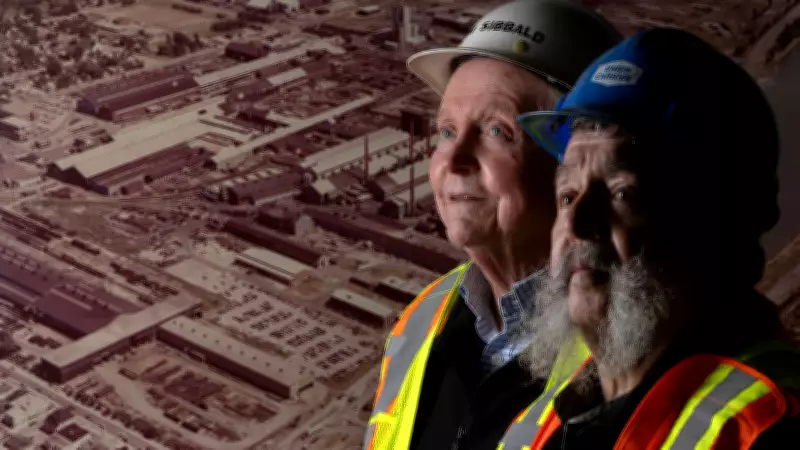
The property at 65 Canal Bank Street once housed a Union Carbide plant that produced synthetic graphite for decades before closing in the late 1990s. Workers discarded graphite scraps into an adjacent landfill. Charest estimates the landfill contains 340,000 tonnes of high-grade synthetic graphite, worth up to US$6.8 billion at current prices. Battery-grade synthetic graphite can fetch US$20,000 per tonne.
Charest paid only $2 for the property according to land transfer documents, though he says the actual price was higher as part of a larger undisclosed deal. He has invested tens of millions of dollars to prove the graphite can be used in modern batteries.

Urban recycling opportunity
As Canada and allies seek to build a graphite supply chain independent of China, which controls 90 per cent of battery anode manufacturing, Charest's model offers a faster alternative to mining or building new synthetic graphite plants. His company, Regen Resource Recovery Corp., aims to produce 25,000 tonnes of battery-grade graphite this year, enough for about 375,000 electric vehicles.
Regen has partnered with Linamar Corp., a major Canadian auto-parts supplier, to process and market the graphite. Former Union Carbide workers, who lost their jobs when the plant closed, have helped the company understand the site's history and estimate the graphite volume.
Challenges ahead
Despite the potential, challenges remain. Automakers require years of testing to qualify new graphite suppliers. Battery-grade graphite must be 99.95 per cent pure, and any impurities could lower its value. Additionally, slowing EV adoption and possible new battery chemistries that eliminate graphite pose risks.
Nevertheless, Charest is optimistic. He has purchased other former graphite plant sites in Europe, the U.S., and Puerto Rico. "Nobody's ever done any of this before, and we figured it out and now we're coming out," he said. "This is a story about the circular economy and resource recovery."