Oil Prices Could Surge to $100 as Iran Conflict Threatens Critical Shipping Lane
Oil prices experienced their most significant single-day surge in four years today, with market analysts predicting that crude could surpass US$100 per barrel as escalating Middle East tensions threaten to create the most substantial energy market crisis in decades.
The World's Most Critical Oil Chokepoint Under Threat
At the heart of this potential crisis lies the Strait of Hormuz, a narrow waterway partially controlled by Iran through which approximately 20% of global oil supplies are transported. According to energy analysts at Rystad Energy, this strategic shipping lane handles close to 30% of global seaborne crude from key suppliers including Saudi Arabia and Iraq.
"Any sustained disruption, formal or de facto, would remove a substantial portion of globally traded crude from the market," warned energy analysts monitoring the situation.

Escalating Military Conflict in the Region
The current crisis escalated over the weekend when the United States and Israel launched military strikes against Iran, resulting in the death of Iranian Supreme Leader Ayatollah Ali Khamenei. Iran has responded with retaliatory strikes against U.S. allies throughout the region.
"Gulf energy infrastructure is now squarely in Iran's sights," said Torbjorn Soltvedt, principal Middle East analyst at risk intelligence company Verisk Maplecroft, in comments to the Financial Times.
Immediate Impacts on Energy Infrastructure
The conflict has already produced tangible effects on regional energy facilities:
- One of Saudi Arabia's largest oil refineries was shut down following a drone attack
- The world's biggest liquefied natural gas plant in Qatar was targeted
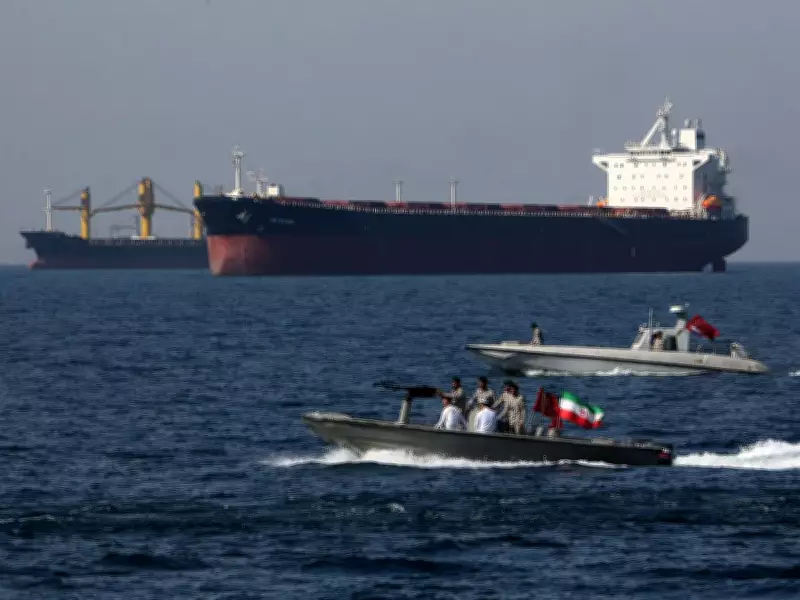
- Iran has warned shipping away from the waterways, effectively closing the Strait of Hormuz after reported attacks on three ships
Market Disruptions and Insurance Withdrawals
The situation has created unprecedented market disruptions:
- Insurers have withdrawn coverage, halting tanker traffic through the region
- S&P Global Energy has stopped accepting bids that help set prices for the Dubai regional benchmark
- John Driscoll, chief strategist at JTD Energy Services, described the physical Arab-Gulf market as "unhinged and rudderless" in this unprecedented situation
Iran's Strategic Position and Capabilities
As the fourth largest oil producer in OPEC, Iran pumps approximately 3.3 million barrels per day, representing about 3% of global output. However, the country's strategic geographical position presents a far greater threat to global oil supplies than its production capacity alone.
Even without an official closure of the Strait of Hormuz, Iran possesses multiple capabilities to disrupt shipping:
- Attacking or detaining commercial vessels
- Jamming GPS signals of tankers to impede navigation
- Mining the critical passageway
Potential Long-Term Consequences
Alan Gelder, SVP of refining, chemicals and oil markets at Wood Mackenzie, noted that tanker rates and insurance costs will increase dramatically. However, these represent only a small portion of the potential impact if the conflict persists beyond a few days.
The conflict shows signs of potentially extending for weeks, with U.S. President Donald Trump indicating the bombing campaign against Iran could continue for an extended period. Iran's security chief has thus far ruled out negotiations, suggesting the situation may not resolve quickly.
This developing crisis threatens to reshape global energy markets and could have far-reaching economic consequences if the Strait of Hormuz remains effectively closed to oil shipments for any sustained period.