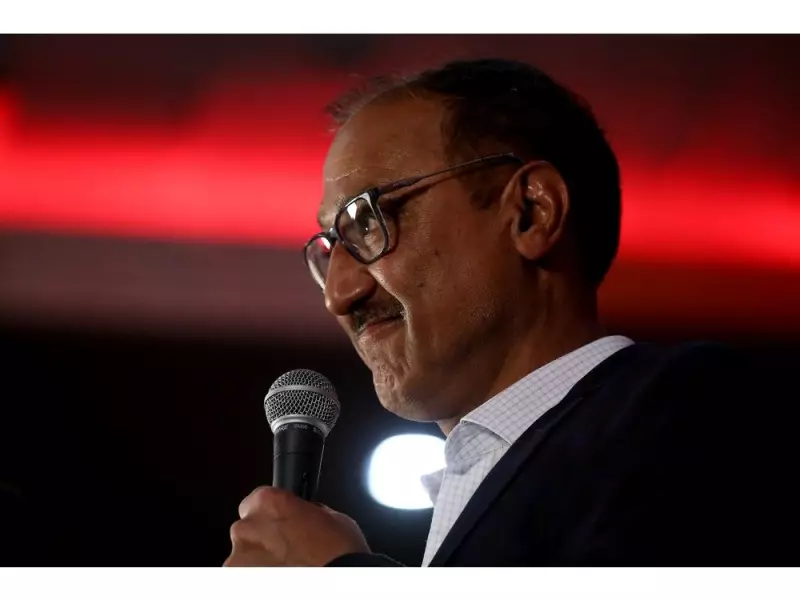
Drawing from his extensive experience as a city councillor, MP, federal cabinet minister, and mayor, Amarjeet Sohi offers a hopeful perspective for 2026. He believes genuine progress stems not from winning political arguments, but from the arduous work of building trust and finding common purpose. It is this pragmatic outlook that fuels his renewed optimism for the often-fractious relationship between the federal government and Alberta.
A Break from the Past: From Acrimony to Partnership
The recent memorandum of understanding (MOU) signed by Prime Minister Mark Carney and Alberta Premier Danielle Smith in January 2026 represents a potential sea change. For decades, the dynamic was predictably confrontational: federal initiatives were met with provincial resistance and lengthy court battles. Sohi points to the federal consumer carbon price as a prime example—a policy he views as sound in theory but whose rigid, top-down implementation fueled such polarization that it was ultimately abandoned. This history, he argues, proves that progress in Canada's federation must be constructed collaboratively from the ground up.
The Foundation of a New Economic and Environmental Partnership
Sohi emphasizes that Canada's ambition to achieve net-zero emissions by 2050 is unattainable without a prosperous and engaged Alberta. The province's energy sector is described as more than an industry; it is a cornerstone of national exports, a generator of countless high-quality jobs, and a key contributor to the social programs Canadians depend on. The new MOU seeks to align federal climate objectives with Alberta's economic capabilities, creating a framework for mutual success.

Under this agreement, Alberta has committed to an industrial carbon price of at least $130 per tonne and to cutting methane emissions by 75% from 2014 levels. A central component is the alignment with the Pathways Alliance Project, aiming to decarbonize oil production through one of the world's most ambitious carbon capture and storage networks.
Policy Shifts and Global Challenges
In return, the federal government has agreed to significant concessions. Ottawa will not proceed with the proposed cap on oil and gas emissions and will pause the application of Clean Electricity Regulations in Alberta until a permanent carbon pricing system is fully established. This flexibility, Sohi contends, allows Alberta to reduce its emissions intensity while maintaining its role as a global supplier of responsibly produced energy.
The former minister underscores the urgency of this renewed partnership in the face of global instability. He notes that for too long, Alberta's resources have been landlocked, sold at a discount due to a lack of market access. The Trans Mountain Expansion project remains the sole West Coast pipeline built in over 40 years. To truly diversify beyond the U.S. market and bolster economic sovereignty, Sohi asserts that Canada must build on the foundation laid by this 2026 MOU and pursue further collaborative action.