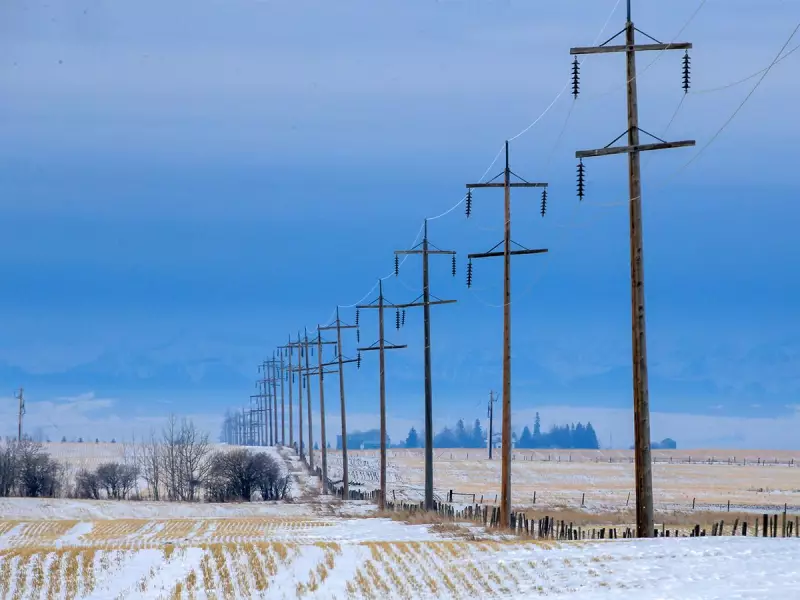
The federal government is calling for enhanced electrical connections between provincial power grids, particularly in Western Canada, as surging energy demand—partly driven by power-hungry artificial intelligence (AI) data centres—threatens reliability.
Federal Official Highlights Need for Integration
Corey Hogan, the Parliamentary Secretary for Energy Minister Tim Hodgson, emphasized the urgency of the situation. He stated that stronger electrical ties, known as interties, are essential for ensuring a stable and reliable power supply across the nation.
"By integrating, we can find ourselves a more stable grid that makes the best use of all of the strengths that are out there," Hogan said in an interview following a funding announcement in Calgary on Monday, January 13, 2026. He confirmed that "the work is underway."

Alberta's Grid Strain and New Funding
The push comes two years after Alberta's electricity grid faced severe strain. In 2024, the province issued an emergency alert during a cold snap, urging residents to reduce power consumption. Later that same year, a supply shortage led to rolling blackouts for some Albertans during near-seasonal spring temperatures.
During the Calgary event, Hogan unveiled approximately $3 million in federal funding for a series of small-scale electricity projects in Alberta. More significantly, federal and provincial officials are negotiating the details of a memorandum of understanding for a potential new oil pipeline to British Columbia's coast. This deal includes a commitment to explore strengthening electricity interconnections between provinces.
AI and Data Centres Fuel Future Demand
A major factor behind the push for a more robust grid is the explosive growth of AI and data centres, which consume vast amounts of electricity. While Alberta's government is actively encouraging this sector, it is also urging developers to bring their own power generation solutions to the table.
"We all know that there's going to be more electricity demand between now and 2050," Hogan noted, adding, "It is wild how much is expected to increase." This sentiment is echoed by energy forecasts; one scenario from the International Energy Agency predicts global energy demand will rise by 0.7 per cent annually until 2035.
Experts argue that current inter-provincial connections are not being utilized to their full potential. Kate Harland, a research lead at the Canadian Climate Institute, wrote last year that improving electricity trade between provinces can help keep prices low and strengthen supply as economic needs mount.
The federal initiative aims to create a more resilient and integrated power network, ensuring that Western Canada can meet its future energy challenges head-on.