The global energy landscape is undergoing a seismic shift under the direction of U.S. President Donald Trump, a transformation that threatens to leave Canada's oil industry isolated and scrambling for relevance. The recent political upheavals in major oil-producing nations are redrawing the world's energy map, with Washington, D.C., now firmly positioned as the world's oil capital.
Geopolitical Upheaval Reshapes Oil Giants
The catalyst for this new world order is the dramatic change in two of the world's largest holders of crude reserves. The fall of Venezuelan dictator Nicolas Maduro has opened the doors for that country's vast resources, estimated at over 300 billion barrels, to potentially re-enter global markets. Simultaneously, the potential collapse of the Islamic Republic in Iran, which holds reserves rivaling or exceeding Canada's, looms as another game-changing event.
Both nations have labored under significant U.S. sanctions for years, particularly during and since Trump's first term. Despite these restrictions, Iran remained a top-ten global producer in 2023. Venezuela's production, however, plummeted, though its capacity for a comeback remains substantial. The prospect of these two heavyweights returning fully to the market sends shockwaves through global energy politics.

Trump's Social Media Diplomacy and Global Ripples
The new energy reality is being broadcast via the President's preferred channel: social media. In a post on his Truth Social platform on October 13, 2025, Trump declared an end to the long-standing arrangement where Cuba received "large amounts of OIL and MONEY from Venezuela" in exchange for protecting its leaders.
"THERE WILL BE NO MORE OIL OR MONEY GOING TO CUBA – ZERO!" Trump stated, suggesting the island nation seek a deal "BEFORE IT IS TOO LATE." Cuban President Miguel Diaz-Canel defiantly responded on X, asserting Cuba's sovereignty, but seemed to miss Trump's central point: its primary oil supplier has been cut off.
The ramifications extend far beyond the Caribbean. China, which has relied heavily on cheap Iranian oil and to a lesser extent Venezuelan crude, now faces pressure as these discounted sources shrink. This forces Beijing to recalculate its energy security strategy in a market where Washington holds increasing sway.
Canada's Energy Sector on the Sidelines
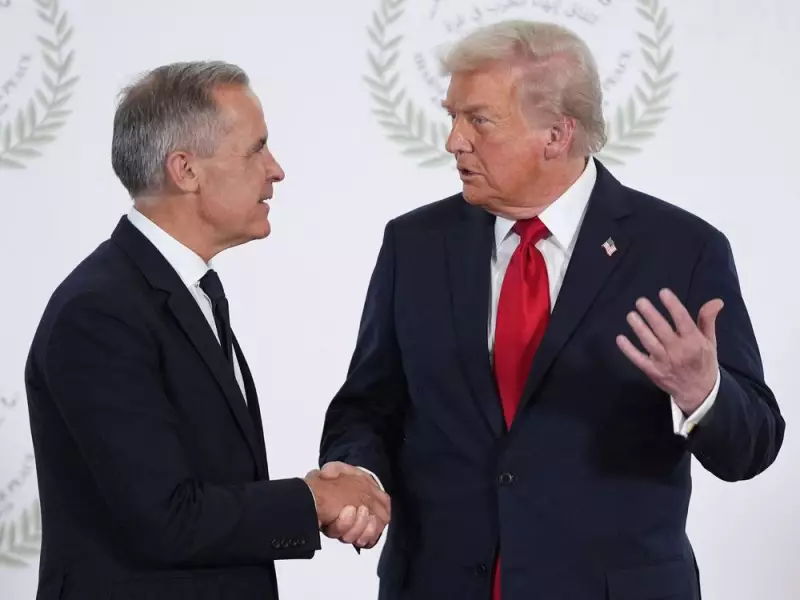
Amid this global repositioning, Canada finds itself an observer rather than a player. Prime Minister Mark Carney has attempted to downplay the impact, arguing at a recent summit that Canada's industry remains competitive due to its "low risk" and "low carbon" profile. This stance, however, faces harsh economic realities.
Analysts question whether European nations, still dependent on Russian LNG and oil, would choose more expensive Canadian crude over a potential flood of Iranian oil, regardless of its carbon footprint. The calculus is simple: proximity and price often trump environmental posturing in global commodity markets.
This leaves China as a potential major export destination for Canadian oil, but that path is fraught with its own geopolitical and logistical challenges. The core issue remains that as Trump actively reshapes the energy order to favor U.S. interests and newly aligned producers, Canada's passive strategy may result in its energy sector being left out in the cold, watching from the sidelines as the rules of the game are rewritten without its input.