Canada's Lost Pipeline Civilization: How We Built Infrastructure at Lightning Speed
Somewhere across this great land, someone or something remarkable is just beginning. This nation has been built upon transformative individuals, groundbreaking ideas, and ambitious initiatives that reshaped our society. From Wayne Gretzky redefining hockey to Frederick Banting saving millions with insulin, from oilsands innovations fueling prosperity to Loblaws revolutionizing how we shop, Canada's history is rich with monumental achievements. Today, we continue our exploration of Canadian greatness in all its diverse forms.
The Calgary Gas Line Miracle of 1912
The skies above Fort Calgary glowed with unusual brilliance on the evening of July 17, 1912, as a warm iridescence illuminated the extended summer twilight. An astonishing crowd of twelve thousand people—representing nearly a quarter of the city's entire population—had gathered on Scotsman's Hill to witness this spectacle. As historian Earle Gray documented, this wasn't a spreading wildfire or rare summer aurora, but rather the flare from a newly completed natural gas pipeline that would transform the community.
Modern readers might attribute this fascination with burning methane to typical Albertan enthusiasm or limited entertainment options in an era without smartphones, internet, or television—when even the birth of a two-headed calf could make headlines. Yet this event represented genuinely significant news that would improve countless lives.

Revolutionizing Energy Access in Early Calgary
Prior to this development, manufactured coal gas served only about 2,000 of Calgary's 60,000 residents. Local drilling produced just enough energy for limited street lighting and, reflecting the priorities of the time, to power a local brewery. The new pipeline promised to bring reliable heating to thousands of additional households who had endured brutal winter conditions, including temperatures plunging to -34°C that January and another cold snap of -28°C in late March.
The natural gas originated from Bow Island, located southwest of Medicine Hat, Alberta, where substantial reserves had been discovered unexpectedly by the Canadian Pacific Railway during water drilling operations back in 1883. This fortunate discovery would now fuel Calgary's growth and comfort.
Engineering Marvel: 307 Kilometers in 16 Days
The construction achievement remains staggering by contemporary standards. The 307-kilometer pipeline consisted of approximately 14,000 individual pipe sections, each measuring 60 feet in length and weighing about 5,000 pounds. These massive components needed to be connected and buried along the entire route.
Astonishingly, workers completed the entire 16-inch diameter line in just 16 days—averaging nearly 19 kilometers of pipeline installation daily. This pace translates to roughly one kilometer completed every hour, assuming crews worked continuously around the clock. The speed and efficiency demonstrated would be virtually unimaginable in today's regulatory and construction environment.
A Lost Civilization of Rapid Development
The breathtaking pace of this early 20th-century construction seems almost mythical by current standards, comparable to the time required for about three World Economic Forum meetings in Davos. This raises profound questions about what enabled such remarkable efficiency—what was this lost civilization that could build so rapidly and effectively that it might merit inclusion alongside ancient engineering marvels like those of the Incas and Aztecs in historical documentaries?
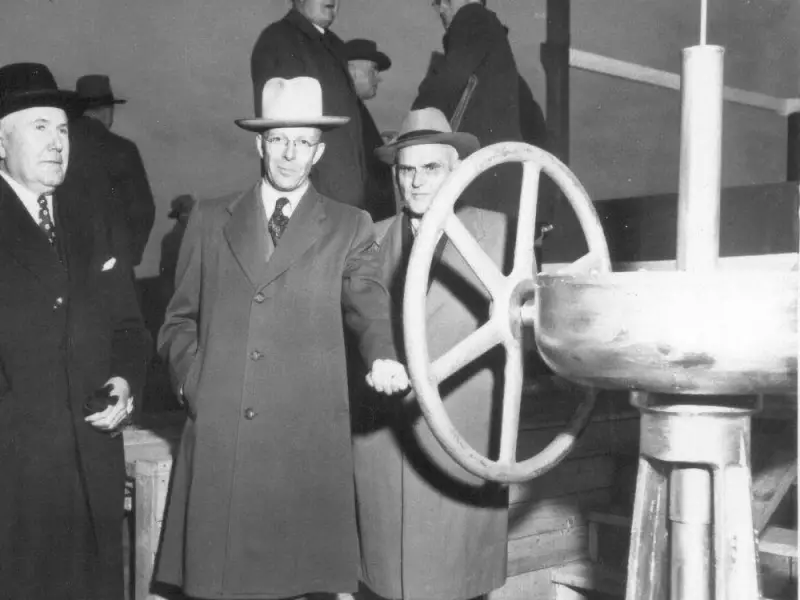
This wasn't an isolated achievement either. The Canol Project during the Second World War demonstrated similar ambition, constructing a 2,600-kilometer oil pipeline through sub-Arctic wilderness from Norman Wells, Northwest Territories, to Alaska in just 20 months. Even legislative processes moved with unprecedented speed—the Liberal government introduced the Pipelines Act on April 5, 1949, and it became law by April 29th, allowing Members of Parliament to return home for the weekend or visit their local establishments.

These historical examples highlight a stark contrast with modern infrastructure development timelines, prompting reflection on how Canada once approached major projects with remarkable speed and determination that has since become increasingly rare in our contemporary regulatory landscape.