Canada has spent much of the past decade sending mixed signals to investors interested in major energy infrastructure projects, according to Gary Mar, a former Alberta cabinet minister and current president of the Canada West Foundation.
In an opinion piece published in the Financial Post, Mar argues that the country needs transparent and consistent energy policies to attract the billions of dollars required for pipeline expansions, increased production, and large-scale carbon-capture infrastructure.
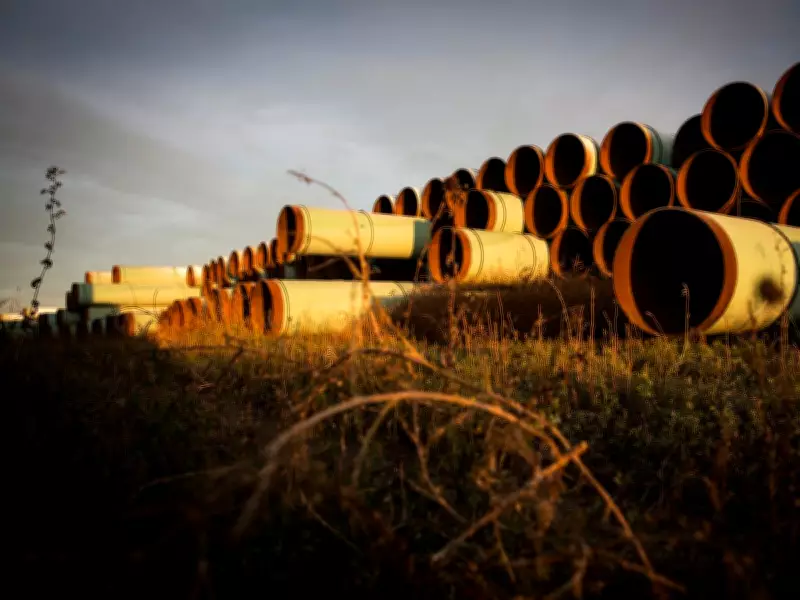
Mar cites several examples of policy inconsistency: the Northern Gateway pipeline was approved and later cancelled; Energy East was abandoned after regulators expanded the review process to include upstream and downstream emissions; the federal government purchased and completed the Trans Mountain expansion because private capital was unwilling to absorb political and execution risk; and Bill C-69, the Impact Assessment Act, was later ruled substantially unconstitutional by the Supreme Court of Canada.

While reasonable people may disagree with individual decisions, Mar contends that taken together, they have contributed to growing concern over Canada's investment climate and its ability to provide stable conditions for long-term projects requiring significant upfront capital.
According to a recent analysis by Servus Credit Union chief economist Charles St-Arnaud, expanding pipeline capacity, increasing production, and building large-scale carbon-capture infrastructure could require roughly $90 billion in upfront investment before additional production reaches new markets. St-Arnaud asks a critical question: where will that capital come from?
Even under relatively optimistic assumptions, governments are already positioned to absorb a meaningful share of the costs through carbon-capture tax credits and other forms of support. Under more expansive scenarios, public exposure could rise much further, raising questions about the role governments should play in supporting major private-sector investments.
Mar draws a historical parallel to the Leduc No. 1 oil well discovery in Alberta in 1947, which came after Imperial Oil Ltd. drilled 133 consecutive dry holes. That discovery transformed the province and the Canadian economy because private capital was prepared to accept long timelines, repeated setbacks, and substantial uncertainty in pursuit of opportunity.
Oilsands projects require significant upfront capital but can remain productive and economically viable for decades once built. Investors need clarity around approvals, confidence in timelines, and assurance that conditions will remain stable once capital has been committed. They need confidence that projects will be assessed fairly and consistently over their lifespan.
Mar emphasizes that these are not extraordinary requests but basic requirements for attracting long-term investment capital. He also highlights a broader competitiveness question: recent geopolitical disruptions have reminded the world that energy security still matters, and events in Europe and the Middle East have reinforced the importance of reliable supply, resilient infrastructure, and long-term domestic energy capacity.